What is an Active User Wheelchair?


If you’re exploring mobility options, understanding the difference between wheelchair types is essential.
In this guide, we’ll explain what an active user wheelchair is, how it compares to standard manual wheelchairs, and whether it’s the right choice for your lifestyle.
We’ll also cover the pros and cons, typical costs, and answer some common questions to help you make an informed decision.
Jump straight to…
What is an active user wheelchair?
An active user wheelchair is designed for wheelchair users with a more active lifestyle, who want to retain their independence and freedom of movement.
This could be people who travel more, participate in wheelchair sports, or just lead more active and dynamic day-to-day lives.
The key features of active user wheelchairs are their ultra-lightweight frames, high levels of customisation, and easier propulsion.
What is the difference between standard and active user wheelchairs?
Standard manual wheelchairs are designed for less active users who may use their wheelchair indoors and for trips out, but generally travel shorter distances and may rely on a carer to push them around. Folding, lightweight manual wheelchairs are generally preferred as they can be folded down and easily lifted into the boot of a car. Powerpacks can be added to give extra propelling power up hills and kerbs, taking strain away from carers.

Active user wheelchairs are more compact wheelchairs built for faster and more responsive movement, with self-propel wheels that are angled for better propulsion. The whole chair is engineered to be as lightweight possible, with materials like carbon fibre, a low backrest and less moving parts. The wheels and frame are designed to maximise propelling power, helping the active wheelchair user to cover greater distances and make tighter turns with less effort. Active wheelchair users need good upper body strength, to propel and turn the chair and keep an upright posture. Powered add-ons can be fitted to the back of the chair or with handlebars on the front, to provide that extra momentum for inclines and longer distances.
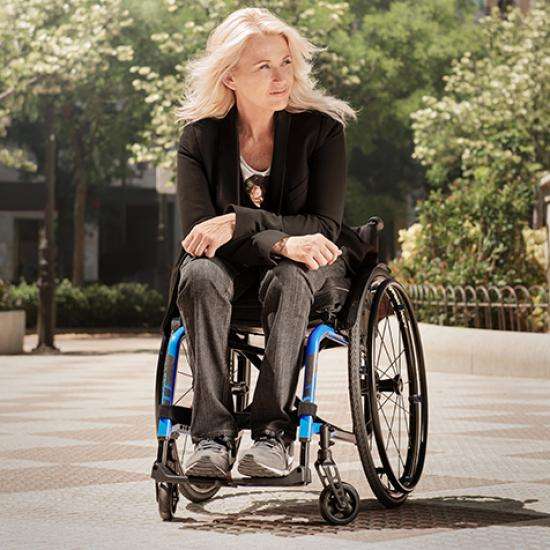
Differences between standard wheelchairs and active user wheelchairs
| Feature | Standard Wheelchair | Active User Wheelchair |
| Frame type | Folding frame | Rigid frame (some folding options) |
| Weight | Heavier | Ultra-lightweight |
| Propulsion | Often carer-assisted | Self-propelled |
| Customisation | Limited | Highly customisable |
| Manoeuvrability | Moderate | High (tight turning radius) |
| Transport | Easy to fold/store | Lightweight with quick-release wheels |
| Comfort | More padding | Performance-focused seating |
| Best for | Occasional use | Daily, active use |
Pros and cons of active user wheelchairs
Pros:
Ultra-lightweight
Usually made from titanium or carbon fibre, these are the lightest wheelchairs on the market making them effortless to lift and move around.
The Quickie Nitrum is just 4.9kg, one of the lightest active user chairs on the market.
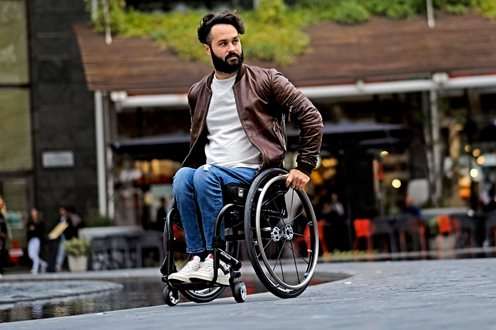
Quickie Nitrum
Energy efficient build
The whole design of these chairs is based around maximising energy transfer from the user.
The strong, rigid frame has fewer moving parts for more responsiveness. 30 to 50% of the active user chairs we sell are folding, but they are designed to lock open with no flex in the frame when unfolded, so no propulsion power is lost. Frames are often made from carbon fibre which is 5 times stronger than steel, extremely durable yet astonishingly lightweight, making it the perfect material for active user chairs. The Tilite ZR has a welded titanium frame, giving it an even higher strength-to-weight ratio.
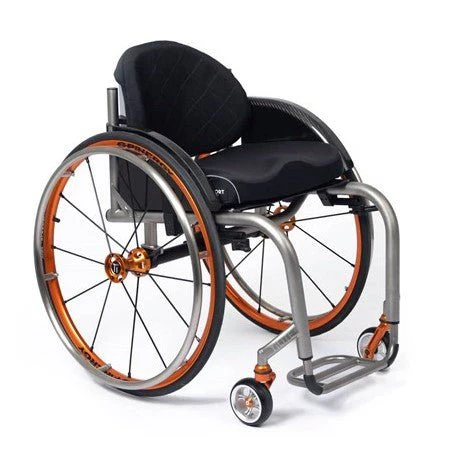
Tilite ZR
The backrests are lower, giving more space for the upper body and shoulders to move when propelling the chair.
The wheels are aligned to be wider at the bottom, giving extra stability and smaller turning circle. This also creates a lower centre of gravity, giving extra stability.
Highly manoeuvrable and responsive
The chairs have a tight turning radius, useful for navigating through busy areas and public spaces.
Custom build
Most active user chairs can be adjusted to give the best possible fit. The Tilite TRA has an adjustable backrest and centre of gravity with precision lock components.

Tilite TRA
Easy to transport
The quick release wheels and weight of the chairs make them ideal for travelling or taking on public transport. The Quickie QS5X has cross-brace technology for easy folding, and a high-strength frame for use with power assists.

Quickie QS5X
Cons:
Need good upper body strength
The upper body strength and range of arm movement needed to propel these chairs is not always suitable for people with progressive neurological conditions.
Cost
The chairs attract a higher cost, particularly with custom builds and carbon fibre frames.
Smaller, compact design
The smaller seat with less cushioning and lower backrest takes a bit of getting used to if you are new to active user chairs. You may need a stability-focused setup at first, before progressing to a more active and efficient setup when you have got used to the chair.
Unsuitable for rough terrain
The rigid frame is unsuitable for uneven terrain and the harder ride may not be suitable for those with spinal conditions or back injuries. This can be mitigated by using a titanium frame, which dampens vibrations, and split castor forks.
Level of specialisation
The chair may need customising to fit you correctly, which can be harder to adjust if needs change over time.
View Our Active User Range
We have a wide range of active user wheelchairs to try
How much does an active wheelchair cost?
Prices can vary quite widely for active user chairs depending on the choice of frame material and level of adjustments needed. Expect anywhere between £1500 and £7000 as a base price before customisation.
Entry-level models: around £1,500 – £2,500
Mid-range models: around £2,500 – £4,000
High-end/custom builds: £4,000 – £7,000+
Additional features such as power assist devices, specialist cushions, or custom seating can increase the overall cost.
How do I know what kind of wheelchair I need?
If you’re still unsure whether you need an active user chair or a basic manual wheelchair, speak to our wheelchair specialists who have years of experience and will be more than happy to help you find what is right for your needs, without any sales pressure.
Our specialists can visit clients in their home or at our own showroom to take a detailed assessment of their needs and let them try out our wheelchairs.
Arrange An Assessment
Our specialists will help you find the perfect solution
Conclusion
An active user wheelchair is an excellent choice for individuals who want greater independence, mobility, and efficiency in their daily lives. With lightweight materials, responsive handling, and custom-built options, these chairs are designed to support an active lifestyle.
Taking the time to assess your needs and seek professional advice will help ensure you choose the right wheelchair for your lifestyle and long-term comfort.
Recommended Products

Quickie Nitrum Rigid Wheelchair
The Quickie Nitrum Active User Manual wheelchair is one of the lightest adjustable aluminium chairs on the market.
Enquire About This Wheelchair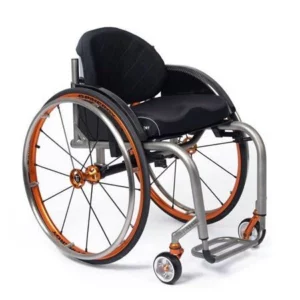
TiLite ZR
The TiLite ZR is a premium active user wheelchair with a welded titanium frame.
Enquire About This Wheelchair
TiLite TRA
The TiLite TRA is the adjustable version of the TR active user chair, with a dual-tubed titanium frame for maximum strength and performance.
Enquire About This WheelchairQuickie QS5 X
The Quickie QS5 X is a folding active user wheelchair that is lightweight and low maintenance, with customised fitting for enhanced comfort and performance.
Enquire About This WheelchairFrequently Asked Questions


