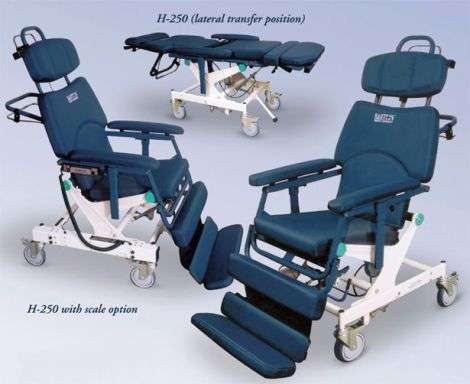
What is a Barton Chair?


When someone is recovering from a major illness or extended hospital stay, even sitting upright can become a major step in rehabilitation. Early mobilisation equipment is designed to support this recovery process safely and comfortably, and one of the widely-used solutions in hospitals is the Barton chair.
In this guide, we explain what a Barton chair is and offer some alternative seating solutions for patient care environments.
Jump straight to…
-
- What is a Barton Chair?
- What Does a Barton Chair Do?
- What Is the Weight Limit for a Barton Chair?
- Is the Barton Chair Adjustable?
- Pros and Cons of a Barton Chair
- What Is the Difference Between a Barton Chair and a Hoyer Lift?
- Is a Barton Chair Comfortable for Long Periods?
- New Alternatives to the Barton Chair
- Conclusion
- FAQs
What is a Barton Chair?
A Barton chair is an early mobilisation chair used in healthcare settings to transfer patients safely from a bed into a seated position. It can be fitted with a patient transfer system, which slides the patient across from the bed onto the chair.
Unlike a traditional hoist, the patient is moved onto the chair in a lying position, before gradually transitioning into sitting when on the chair.
One of the key features of a Barton chair is that it converts all the way from a stretcher into a chair. This allows caregivers to reposition patients with minimal physical strain and keep the patient comfortable throughout.
Barton chairs are particularly beneficial for:
- Stroke rehabilitation patients, who may have some lost feeling in their body and need to rehabilitate gradually.
- ICU and post-surgery patients
- Patients who cannot tolerate traditional lifting methods

Patient transfer system on Barton chair
Browse Our Acute Seating Range
Hospital treatment chairs
What Does a Barton Chair Do?
The main purpose of a Barton chair is to support early mobilisation, while improving patient comfort and reducing manual handling risks.
Instead of lifting a patient directly onto a wheelchair or recliner, the chair is positioned flat alongside the bed, level with the top of the mattress. The patient is then transferred across in a lying position, using the patient transfer system if required.
This process helps:
- Reduce physical strain during transfers
- Improve patient dignity and comfort
- Minimise pressure on sensitive joints or injuries
- Allow safer movement for patients with limited strength or stability
The chair can then be tilted or reclined to any angle required, adjusting the patient’s posture throughout the day depending on medical or comfort needs.

Book a Free Seating Demonstration
Find comfortable seating
What Is the Weight Limit for a Barton Chair?
Weight limits vary depending on the model, but the Barton H-250 has a maximum user weight of 113kg (17.8 stone). It is always important to check the manufacturer’s guidance for individual models before use.
Is the Barton Chair Adjustable?
The Barton chair is adjustable and has a variety of positioning options. Most models include an adjustable headrest and backrest, tilt-in-space, and recline functions.
These features help clinicians position patients safely, while improving overall comfort during rehabilitation.
Pros and Cons of a Barton Chair
Pros
Comfortable Transfers
A major benefit is that patients can be transferred in a prone position rather than being lifted. This is ideal for people who dislike hoisting or find lifting painful or distressing.
Supports Early Rehabilitation
The gradual transition from lying to sitting encourages early mobilisation, which can improve recovery outcomes and reduce complications associated with prolonged bed rest.
Multi-Purpose Design
Because the chair functions as both a stretcher and seating solution, it reduces the need for multiple pieces of equipment.
Enhanced Patient Dignity
The transfer process often feels less intrusive and more comfortable for patients compared to traditional hoisting systems.
Cons
Heavy and Difficult to Manoeuvre
One drawback is the overall weight of the equipment. Depending on the model, a Barton chair can weigh between 93kg and 142kg. This can make manoeuvring the chair difficult in smaller clinical environments.
Requires Staff Training
Healthcare staff need training to use the equipment safely and correctly.
Large Footprint
The size of the chair may not suit all home care or smaller ward environments.
Get Expert Advice
Speak to a seating specialist
What Is the Difference Between a Barton Chair and a Hoyer Lift?
Although both are designed to assist with patient transfers, a Barton chair and a Hoyer lift work very differently.
A Hoyer lift, also known as a mobile hoist, is a free-standing mechanical lifting device on wheels used to hoist a patient out of a bed or chair using a sling system.

Transferring patient with mobile hoist
These devices typically include:
- Spreadable legs for stability
- Smooth rolling castors for easy movement across floors
- Mechanical or powered lifting arms
- A detachable sling to hoist the patient
A Barton chair is a non-hoisted transfer solution, for those who have difficulty being hoisted.
Instead of suspending the patient in a sling, the individual is transferred while lying down using a slide sheet or transfer device.
Is a Barton Chair Comfortable for Long Periods?
The Barton chair combines all the main features of a recliner, stretcher and wheelchair into one piece of equipment, providing enhanced comfort for longer periods through the use of tilt-in-space positioning and reclining backrest. This helps the patient find the right position for their needs, maintaining comfort throughout the day. They can be wheeled around in this position, helping them access different areas such as toilets or day rooms, while still under supervised care.
New Alternatives to the Barton Chair
While Barton chairs are highly functional, they are not always the best option for long-term seating or pressure management.
For patients who may need to sit out for extended periods, more specialist care chairs may offer greater comfort and support for a longer recovery programme.
Solutions such as the QuickCare Pro Lie-Flat Chair and Sertain HILO Chair are designed for early mobilisation in ICU, featuring the Multicush™ Pressure Management System to improve long-term comfort while reducing pressure injury risk.

QuickCare Pro
Pressure care seating can help by:
- Redistributing pressure more effectively
- Supporting posture and positioning
- Improving long-term sitting tolerance
- Enhancing patient comfort throughout the day
In many care environments, these specialist chairs are used to provide more comprehensive patient support.
Conclusion
Compared to traditional hoisting systems, Barton chairs offer a smoother transfer for patients who find lifting uncomfortable or distressing.
More specialist pressure care seating is available to maximise comfort during longer periods of sitting. By combining safe mobilisation with effective pressure management, healthcare providers can help improve both recovery outcomes and overall patient wellbeing.
Recommended Products
QuickCare Pro Lie-Flat Chair
The QuickCare Pro is an extremely versatile lie-flat chair, designed to adapt to wide array of different acute care settings, from day surgery through to dialysis and oncology.
Enquire About This Chair
Sertain 4540 Hi-Lo ICU Early Mobilisation Chair
The Sertain S4540 Hi-Lo Care Chair is a versatile, advanced solution designed in collaboration with critical care, trauma, and ICU HCPs.
Enquire About This ChairFrequently Asked Questions