Best Powerchairs for Spinal Cord Injuries


For many people living with a spinal cord injury (SCI), a powerchair is far more than a mobility aid. It is the key to independence, allowing users to work, study, socialise, travel and participate fully in everyday life.
Whether someone has paraplegia or tetraplegia, choosing the right powerchair can have a significant impact on their comfort, health and quality of life. The right chair can support posture, reduce the risk of pressure injuries, improve access to the community and minimise reliance on carers. The wrong chair can limit independence, increase fatigue and create clinical complications.
For compensation-funded clients, powerchair provision often forms a major part of the wider rehabilitation journey. Unlike standard wheelchair provision, there may be greater scope to consider advanced seating systems, specialist controls and technology that supports long-term independence. This makes choosing the right chair particularly important.
However, with numerous manufacturers, drive configurations and seating options available, identifying the most suitable solution can be challenging.
In this guide, we’ll explore the key considerations when selecting a powerchair following a spinal cord injury and highlight some of the leading models available.
Jump straight to…
-
-
- Why Powerchair Choice Matters Following a Spinal Cord Injury
- Powerchairs for Paraplegia vs Tetraplegia
- Features to Look for in a Powerchair for SC
- Mid-Wheel, Front-Wheel or All-Terrain?
- The Best Powerchairs for Spinal Cord Injury
- Best for Adventure and All-Terrain Access: Magic Mobility Magic 360
- Why There Is No Single ‘Best’ Powerchair for Spinal Cord Injury
- Conclusion
- Frequently Asked Questions
-
Why Powerchair Choice Matters Following a Spinal Cord Injury
The level of an injury can significantly affect mobility, upper limb function, trunk stability, posture and pressure management needs. As a result, the powerchair requirements of someone with a T12 injury may look very different from those of someone with a C5 injury.
A powerchair should support much more than movement from A to B. It should enable the user to:
- Access their home safely and independently
- Maintain good posture throughout the day
- Manage pressure effectively
- Reach work, education and social activities
- Navigate indoor and outdoor environments
- Reduce physical fatigue
- Maximise participation in everyday life
For many people, the chair becomes the most-used piece of equipment in their daily lives, making careful assessment and prescription essential.
Permobil M5 Corpus Electric Wheelchair
Choose Your Best Powerchair
Book a free powerchair assessment
Powerchairs for Paraplegia vs Tetraplegia
While every individual has unique needs, there are some common considerations depending on the level of injury.
Paraplegia
People with paraplegia typically retain full or near-full function in their upper limbs but experience paralysis affecting the lower body.
As a result, powerchair selection often focuses on:
- Manoeuvrability
- Outdoor performance
- Comfort during extended use
- Pressure management
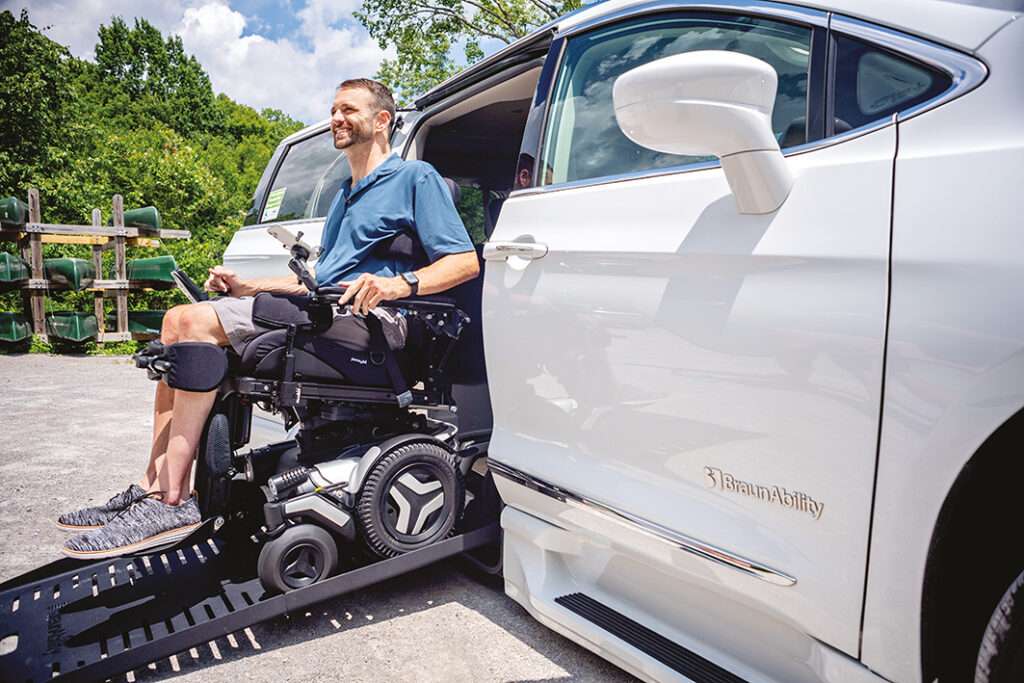
- Transport and vehicle access
- Lifestyle and employment needs
Many users with paraplegia can operate standard joystick controls and may prioritise a chair that supports an active lifestyle with excellent community access.
Tetraplegia
Tetraplegia affects all four limbs to varying degrees and can significantly impact hand function, arm strength and trunk control.
For these users, powerchair selection often places greater emphasis on:
- Advanced seating and positioning
- Pressure management
- Tilt and recline functions
- Specialist controls
- Head and trunk support
- Future adaptability
In these cases, the chair functions as both a mobility device and a clinical seating system.
Features to Look for in a Powerchair for SCI
Tilt-in-Space
Tilt systems allow the entire seating system to rotate backwards while maintaining the user’s posture.
This helps redistribute pressure, reduce the risk of pressure injuries and support comfort throughout the day.
For many full-time wheelchair users, powered tilt is considered an essential feature.
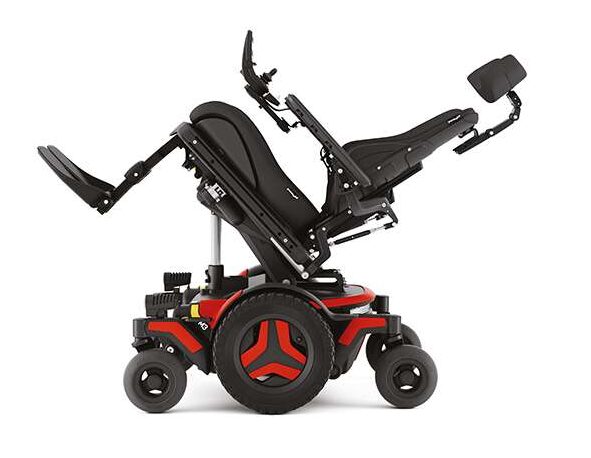
Permobil M3 Corpus Electric Wheelchair
Powered Recline
Recline adjusts the backrest angle and can assist with pressure relief, comfort and personal care activities.
It is particularly valuable for users who spend long periods seated.

Permobil X850 All Terrain Electric Wheelchair
Elevating Leg Rests
These can help with positioning, comfort and lower limb swelling management.

Permobil M5 Corpus Electric Wheelchair
Seat Elevation
Seat elevation technology allows users to raise their seated position, making it easier to access cupboards, kitchen worktops, desks and social interactions at eye level.
This feature can have a significant impact on independence and participation.

Permobil M5 Corpus Electric Wheelchair
Alternative Controls
For individuals with reduced hand function, alternative driving controls may include:
- Compact joysticks
- Swing-away controls
- Chin controls
- Head controls
- Switch systems
- Bluetooth-enabled environmental controls
A specialist assessment can determine the most appropriate solution.
Book a Mobility Assessment
Find the right powerchair for you
Mid-Wheel, Front-Wheel or All-Terrain?
Before choosing a specific powerchair model, it is important to understand the differences between drive systems.
Mid-Wheel Drive
Mid-wheel drive chairs are often preferred for indoor use due to their exceptional manoeuvrability and tight turning circles.
They are particularly useful in homes, workplaces and public buildings where space may be limited.

Permobil M3 Corpus Electric Wheelchair
Front-Wheel Drive
Front-wheel drive powerchairs generally offer a smoother ride outdoors and can cope well with uneven terrain and obstacles.
They are often chosen by users who spend significant time in the community.

Permobil F5 Corpus Electric Wheelchair
All-Terrain Systems
For users who enjoy outdoor activities, countryside access or more challenging environments, specialist all-terrain powerchairs can provide greater freedom beyond pavements and shopping centres.

See the Full Permobil Range
Browse our range of powerchairs
The Best Powerchairs for Spinal Cord Injury
While there is no single ‘best’ powerchair for every SCI user, the following models are among the most popular and versatile options available.
Best Overall Powerchair for Complex Spinal Cord Injury: Permobil M3 Corpus
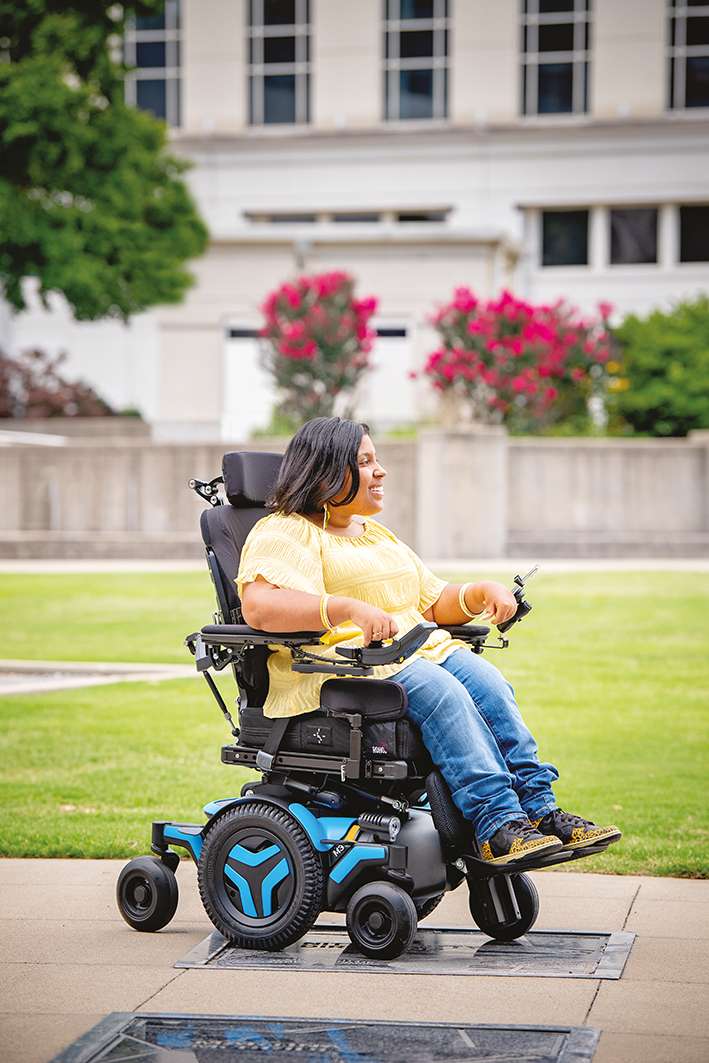
Permobil M3 Corpus Electric Wheelchair
Ideal for:
- Tetraplegia
- High-level paraplegia
- Users requiring complex seating
- Full-time wheelchair users
Best for Indoor Independence: QUICKIE Q300 M Mini
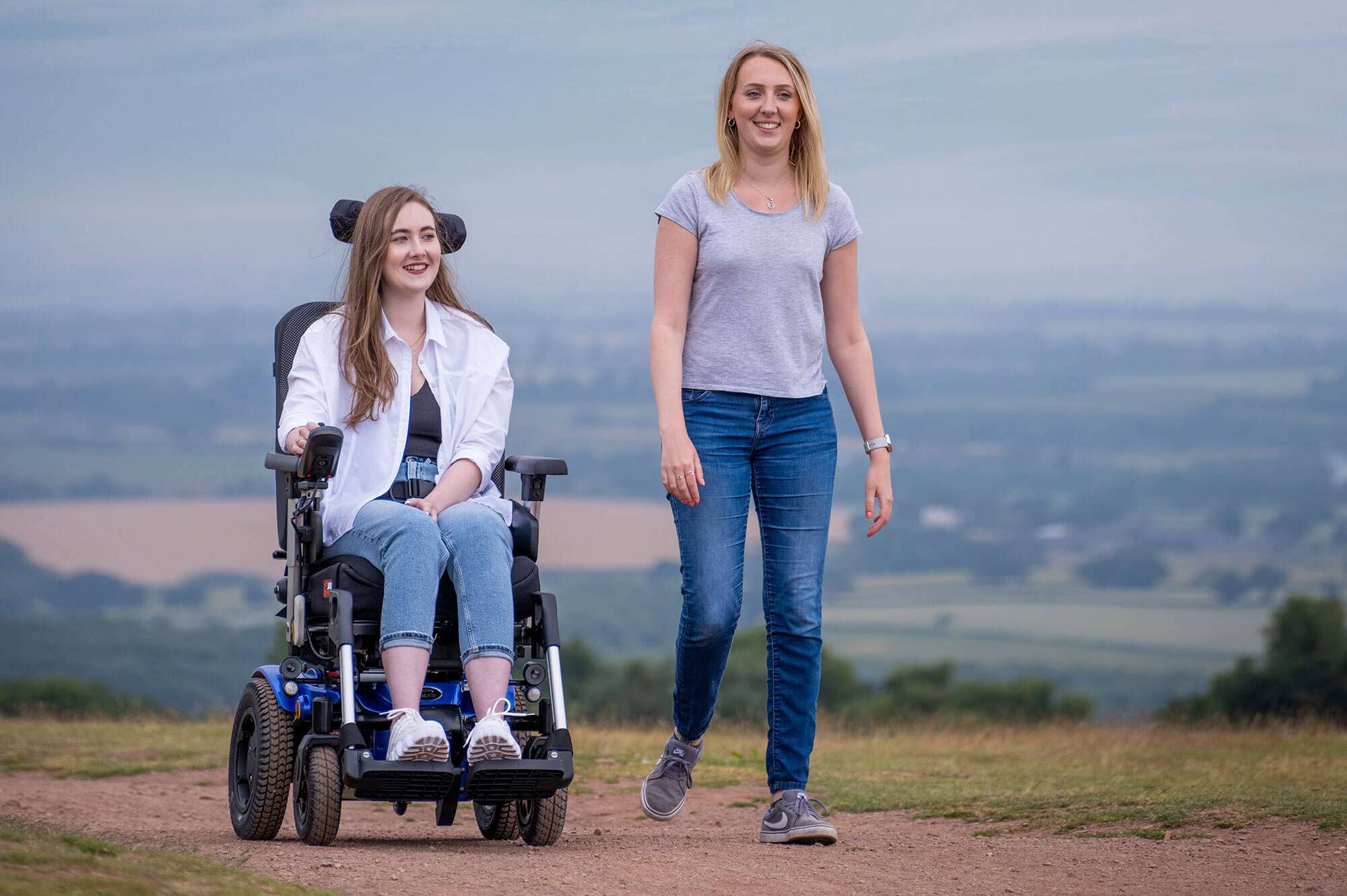
Many compensation-funded clients prioritise independence within the home, particularly when navigating narrow hallways, kitchens and bathrooms.
The QUICKIE Q300 M Mini has one of the smallest footprints in its class while still offering powered seating options and excellent outdoor capability. Its compact design makes it particularly attractive for users whose homes may not have been adapted around a larger rehabilitation powerchair.
- Ideal for:
- Paraplegia
- Smaller homes
- First-time powerchair users
- Clients needing maximum manoeuvrability
Best for All-Terrain Access: Magic Mobility Magic 360

Independence does not stop at the pavement.
The Magic 360 is designed for users who want access to parks, trails, beaches and more challenging outdoor environments while still maintaining everyday usability. For younger or highly active SCI clients, it can significantly expand opportunities for recreation and participation.
Ideal for:
- Paraplegia
- Outdoor recreation
- Uneven terrain
- Lifestyle-focused mobility
Why There Is No Single ‘Best’ Powerchair for Spinal Cord Injury
One of the biggest misconceptions is that there is a universally “best” powerchair for spinal cord injury.
In reality, the ideal solution depends on:
- Level of spinal cord injury
- Upper limb function
- Pressure injury risk
- Postural requirements
- Home accessibility
- Vehicle access
- Employment and education goals
- Lifestyle ambitions
- Future clinical needs
For compensation-funded clients, the most successful outcomes are achieved through a multidisciplinary assessment involving the client, occupational therapist, physiotherapist, case manager and specialist wheelchair provider.
Conclusion
The best powerchair for spinal cord injury is the one that maximises independence while supporting long-term health, comfort and participation.
For many users, the Permobil M3 Corpus remains the gold standard for complex rehabilitation seating. Those prioritising compact indoor mobility may benefit from the Quickie Q300 M Mini, while active outdoor users often gravitate towards the Magic 360. Users requiring standing functionality should consider the Permobil M Corpus VS as part of a specialist assessment.
The key is not choosing the most expensive chair or the newest model, but identifying the solution that best supports the individual’s goals, environment and future independence.
Recommended Products

Permobil M Corpus VS Electric Wheelchair
The Permobil M Corpus VS electric wheelchair brings a new dimension to power standing, also offering maximum stability, traction, ride comfort and manoeuvrability with a mid-wheel drive base.
Enquire About This Wheelchair
Q300R Electric Wheelchair
The highly manoeuvrable Q300 R is super compact at 550mm wide, nimble indoors but with exceptional traction and drive performance for outdoor terrain.
Enquire About This Wheelchair
Magic 360 Electric Wheelchair
Introducing the Magic 360 a powered chair that is just as comfortable around your home as it is outdoors.
Enquire About This WheelchairFrequently Asked Questions