Best Chairs for People with Progressive Supranuclear Palsy (PSP)


Progressive supranuclear palsy (PSP) is a rare neurological condition that affects everyday activities as it progresses. Activities such as sitting comfortably, getting out of a chair and eating meals can become increasingly challenging.
Specialist seating can help support posture, redistribute pressure and make it easier for carers to assist with daily activities.
In this guide, we’ll explore what to look for in chairs for people with PSP, and explain which specialist seating solutions can help.
Jump straight to…
What Is Progressive Supranuclear Palsy?
Progressive supranuclear palsy (also known as Steele-Richardson-Olszewski syndrome) is a progressive neurological condition that affects movement, balance and vision. It can be confused with Parkinson’s disease particularly in its early stages, and is harder to diagnose due to the wide range of symptoms.
People with PSP commonly experience difficulties with balance, including a tendency to fall backwards. Muscle stiffness, particularly around the neck and trunk, can also affect their posture.
Other symptoms can include:
- Mobility problems: Difficulty walking, turning and moving safely between sitting and standing.
- Fatigue and discomfort: Spending longer periods sitting, combined with stiffness and reduced mobility, can make comfortable positioning increasingly important.
- Speech and swallowing difficulties: Changes in muscle control can affect communication and make safe positioning during meals particularly important.
Not everyone with PSP experiences the same symptoms, and their needs can change as the condition progresses. This is why a chair should be selected according to the person’s individual presentation rather than the diagnosis alone.

Need a Specialist Seating Assessment?
Book a free no obligation seating home visit
Why Is Specialist Seating Important for People with PSP?
If someone has problems with balance, posture or mobility, an ordinary armchair may not be sufficient.
Low armrests can make standing harder, and a lack of trunk support can leave someone insecure or uncomfortable.
For people with PSP, the challenge can be more difficult because they may have difficulty controlling their balance while also experiencing stiffness and mobility problems.
Specialist seating can help address these challenges:
1. Supporting Posture and Balance
Some people with PSP develop significant stiffness and a tendency to extend their neck or trunk backwards. Others may lean, slump or struggle to maintain their position without assistance.
Depending on the person’s assessment, useful features may include:
- Adjustable backrests and head supports: the chair can be adapted to the individual’s posture, by removing wadding and adjusting the position of cushions.
- Lateral supports and wedges: help support the trunk and reduce leaning where appropriate.
- Cocoon-style backrests: Provide additional support around the body where a standard backrest is insufficient.
- Adjustable seat dimensions: ensure that the pelvis and trunk are properly supported.

2. Reducing Pressure During Prolonged Sitting
As PSP progresses, people become less mobile and may spend longer periods sitting in a chair.
Staying in one position for too long can increase the risk of pressure damage, particularly when someone cannot easily recognise discomfort or move themselves independently.
Pressure-relieving cushions and fabrics can help manage pressure and prevent the build-up of moisture. Tilt-in-space can also help change and redistribute pressure.
Features to consider include:
- Pressure-management cushions such as Levitex foam
- Breathable upholstery such as dartex
- Tilt-in-space functionality
Pressure care should form part of a wider plan that includes appropriate repositioning, skin checks and professional assessment, as no chair or cushion can eliminate pressure-injury risk entirely.

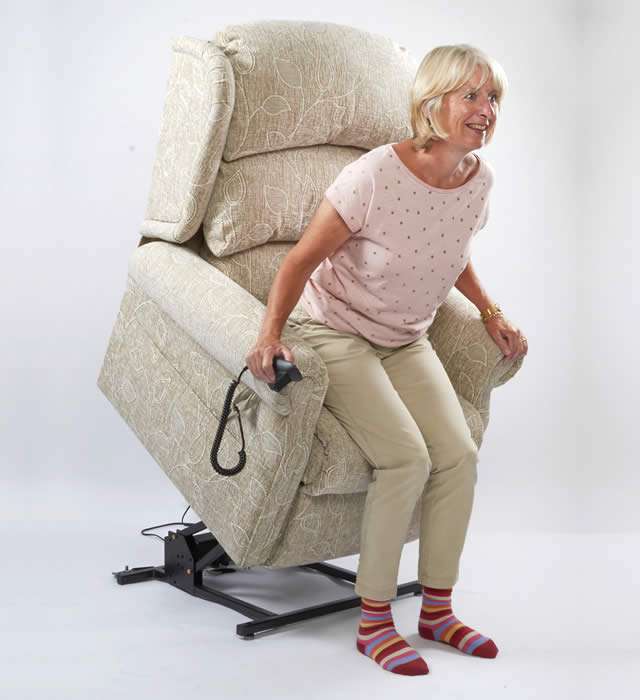
3. Making Transfers Safer and Easier
Getting in and out a chair can become increasingly difficult for people with PSP, due to problems with balance, movement sequencing and stiffness.
Important considerations include:
- Seat height: The seat must be the right height for the person’s leg length
- Armrests: Well-positioned ergonomic armrests provide a stable surface to push against when standing.
- Seat firmness: A supportive seat cushion with a faster rate of return like Levitex foam makes standing movements easier.
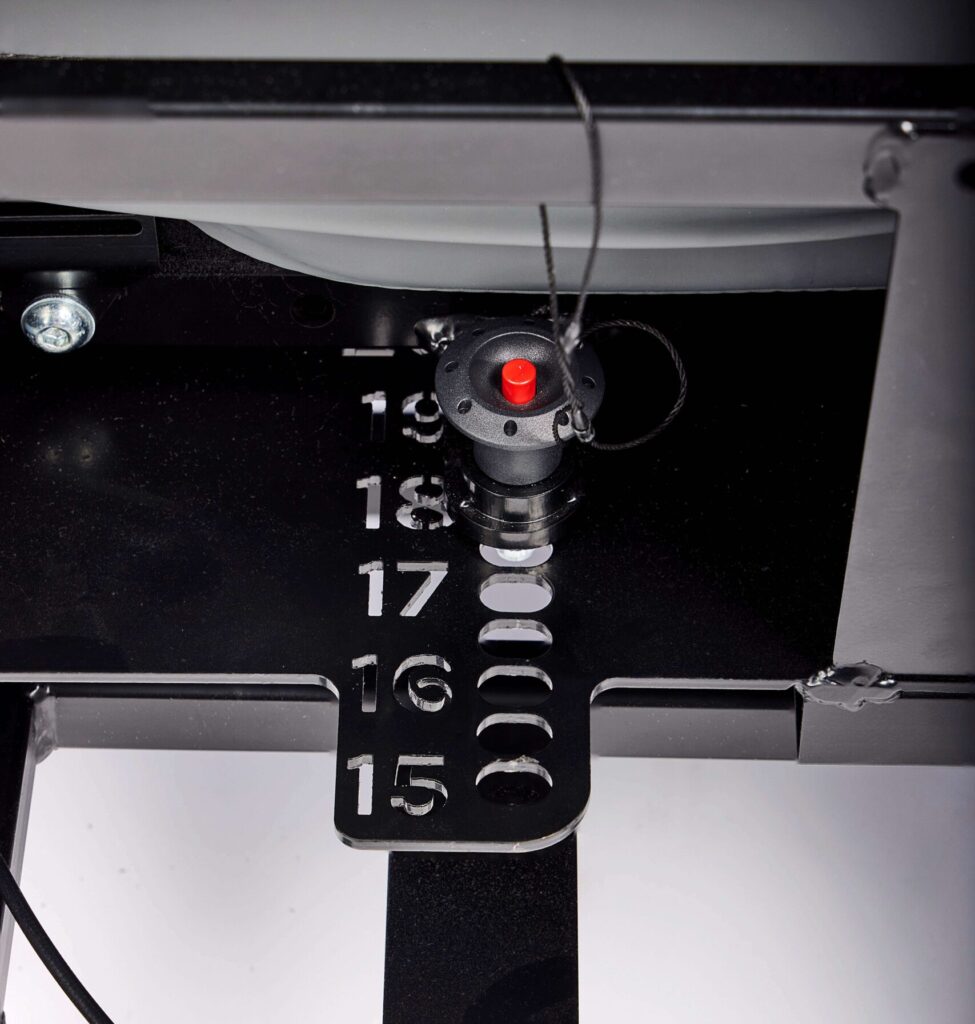
- Rise functionality: The rise function can be set to the right angle with graded vertical rise, to match their balance and physical abilities.
- Access for carers: The chair needs to be compatible with moving and handling and easy to reposition.
The right seating solution should be look at with an occupational therapist or physiotherapist to take a full assessment of the person’s transfer ability.
4. Maintaining a Comfortable Position for Eating and Drinking
Swallowing difficulties, known as dysphagia, are an important consideration for people with PSP.
A suitable chair can provide a supported position during meals with a food tray attached. However, the correct positioning of the head, neck and trunk is important for the swallowing.
Adjustable backrests and head supports can be used with specialist seating to make swallowing easier and safer.
People with PSP who experience swallowing difficulties should have their positioning assessed by an appropriate healthcare professional, such as a speech and language therapist, working with their seating team.

Little Lento care chair with food tray
5. Adapting to Changing Needs
PSP is a progressive condition, so someone who initially needs help getting comfortable may eventually require additional trunk support, pressure management or assistance with transfers.
This is why it’s worth investing in a chair that can be adjusted as needs change, to follow the line of the condition.
Look for:
- Adjustable seat width, depth and height.
- Interchangeable backrests or additional postural supports.
- Multiple positioning options.
- Pressure-relieving cushion choices.
- Accessories that can be added or changed
This approach helps a chair remain useful over the long term.
Know Someone With PSP?
Contact us for no-obligation seating advice
What Type of Chair Is Best for Someone with PSP?
There is no single chair that is best for progressive supranuclear palsy. The right option depends on which stage they are at the degree it has affected their mobility, posture and transfer ability.
These are the best recommendations from our seating range.
1. Care Chair
Care chairs are best for people who need substantial postural support, can adapt as their needs change.
A specialist care chair offers more adjustment and positioning options than a conventional riser recliner.
Depending on the model, features may include adjustable seat dimensions, interchangeable backrests, tilt-in-space, leg support and accessories to improve postural stability.
Features such as tilt-in-space, articulating legrests are useful for people with PSP who may spend much of the day sitting and have difficulty maintaining their position.
A specialist care chair is also more appropriate when transfers require hoisting.
Lento Care Chair
The Lento Care Chair is best for high-need patients who are hoisted and require adjustable seating. Its configurable dimensions, interchangeable backrest options allow the chair to be tailored to individual requirements.
The tilt in space can provide additional comfort and pressure relief.
2. Neurological Care Chair
Some people with PSP develop complex postural difficulties that require more than a conventional care chair.
A specialist neurological chair may offer additional support through its seat shape, backrest design and positioning accessories.
Depending on the person’s needs, useful features include:
- A contoured or cocoon-style backrest.
- Adjustable lateral supports.
- A seat configuration designed to support pelvic positioning.
- Additional support for the head and trunk, where appropriate.
- Adjustable positioning to accommodate changes in comfort and posture.
A cocoon-style backrest may help some people feel more supported, whereas others may want a more open backrest to make assisted transfers easier.
Lento Neuro
The Lento Neuro is designed for people with complex neurological seating needs. Its front pivot tilt in space provides extra comfort and pressure relief, and the cocoon design of the chair keeps users safe and stable.
3. Riser Recliner chair
People in the earlier stages of PSP with sufficient mobility to transfer can benefit from a riser recliner to assist with sitting to standing reclining functions can also provide different resting positions.
This type of chair help users maintain independence at home.
Lento Mobile
The Lento Mobile combines the functions of a riser recliner with the postural features associated with a specialist care chair.
The variable rise function helps PSP users rise at angle that works best from them, supporting them from behind to prevent falling.
How Does PSP Seating Compare with Parkinson’s Disease and MND?
People looking for seating based on a neurological diagnosis may find that many of the challenges overlap across different conditions.
We have previously explored specialist seating for Parkinson’s disease, motor neurone disease (MND), multiple sclerosis (MS) and dementia, which cover several principles that are also relevant to people with PSP.
How to Choose the Right Chair for Someone with PSP
Before investing in specialist seating, it is worth arranging an assessment with an occupational therapist or seating professional.
This ensures that the chair addresses the person’s specific needs, rather than simply offering a collection of features that may not be appropriate.
During the assessment, these are some useful questions to ask to determine the best chair for them:
- How well can the person maintain their seated balance?
Do they lean backwards or to one side? Can they maintain their head and trunk position independently, or do they require additional support?
- How do they transfer into and out of the chair?
Can they stand safely with support, or do they require assistance from a carer or hoist? Is a rising mechanism appropriate?
- How long do they spend sitting?
Someone who spends most of the day in a chair will need higher positioning and pressure care than someone who uses it for short periods.
- Are there any swallowing or breathing difficulties?
If so, the seating position should be considered alongside advice from the relevant healthcare professionals.
- What support will they need in the future?
Because PSP is progressive, it is worth considering whether the chair can be adjusted as their posture, mobility and care needs change.

Conclusion
Progressive supranuclear palsy makes sitting, standing and maintaining a comfortable posture increasingly difficult. The right specialist seating can help address some of these challenges, supporting comfort, positioning and day-to-day care.
The important thing is to choose a chair that reflects the person’s individual needs, including their tendency to fall backwards, level of trunk control, transfer ability and pressure-care requirements.
If you or someone you care for is living with PSP, our team can help you explore the available seating options and arrange a specialist assessment.
Frequently Asked Questions


