Best Electric Wheelchairs for Motor Neurone Disease: A 2026 Guide


Motor Neurone Disease (MND) is a progressive neurological condition that affects the nerve cells controlling voluntary muscle movement. As the disease progresses, most people will need an electric wheelchair not just to get around, but to maintain comfort, dignity, and independence for as long as possible.
In this guide, we cover what to look when specifying powered wheelchairs for MND, how needs change over time, and which chairs from our range work best.
Jump straight to…
What is Motor Neurone Disease (MND)?
As MND progresses, the motor neurons in the brain and spinal cord that control essential muscle movement die, leading to increased muscle weakness and paralysis.
MND progression can look different from person to person, there’s no single pattern and some people start with weakness in a limb whereas others notice speech or swallowing difficulties first. Movement and mobility declines and often quite quickly, which is why the choice of wheelchair matters so much.
MND does not usually affect sight, hearing and touch, which is why adapted controls can be so useful for powerchair users with MND.

Why Future-Proofing is Essential
A motorised wheelchair for someone with MND doesn’t just have to meet current needs, but future-proof for changing needs as the disease progresses over time.
Progression of MND symptoms can be slowed thanks to medical breakthroughs, but it is not always easy to predict what someone’s needs will be in 6 or 12 months’ time, which is why having the ability to customise the chair easily as these needs arise is such an advantage for MND users.
Reclaim your freedom and independence
See our Permobil Range
Welcome to the Future: A Galactic Range of Options
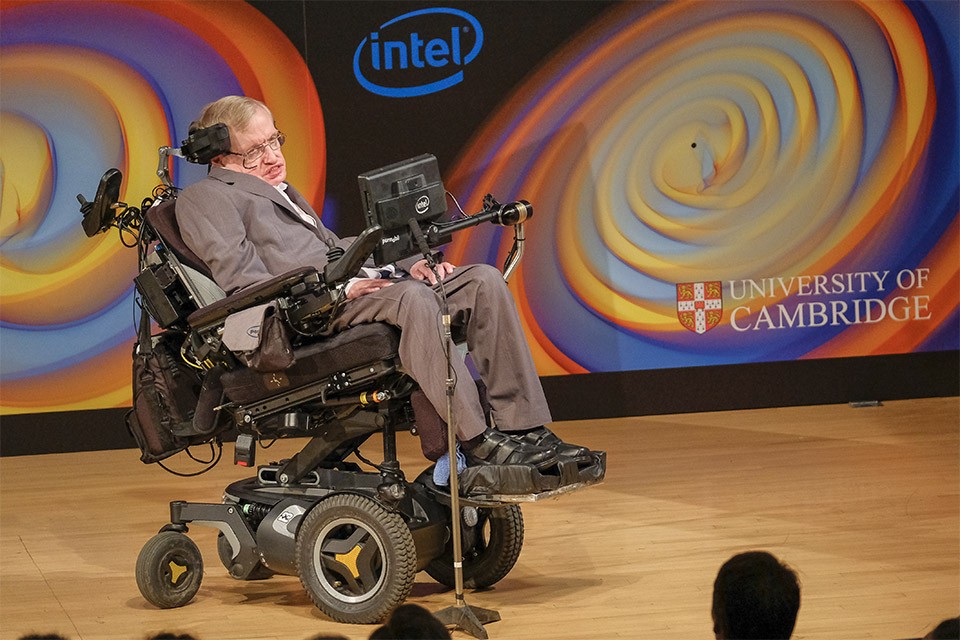
The late Professor Stephen Hawking lived with MND for over 50 years, from being first diagnosed with the condition when he was 21.
The remarkable story of his pioneering work on black holes and immense contribution to the world of physics is testament to the enabling power of assistive technology.
Having used various models of powerchair from the 1980s, Hawking first started using Permobil in 2014 with the C350 model, before moving on to the F3 Corpus in 2016, which is now on display at the Science Museum in London.
Professor Stephen Hawking
Why did Professor Hawking use the Permobil F3 Corpus?
Hawking’s personal assistant described the F3 powerchair as his ‘mobile office’. Rather than just a mobility device, in the later stages of Hawking’s slow-progressing MND, his Permobil was an extension of his everyday life, carrying his voice synthesizer, ventilation support and mounted laptop everywhere he went.
The level at which he could adapt the F3 to his daily needs is due to the immense customisation capabilities of Permobil chairs. Indeed, some of the adaptations he had built for him are now available as standard, showing just how technically advanced Permobil electric wheelchairs are.
Hawking’s Customisation Current Permobil Equivalent
Hawking's Customisation | Current Permobil Equivalent |
Cheek-muscle switch operated by infrared sensor | Head Controls run up to 2 specialty input devices, supported by the Omni2 Control interface |
Laptop mount with custom wiring | Adjustable Tray and Unitrack mounting rails are designed for laptops and other communication aids |
Communication electronics mounted to back of chair | Omni2 infrared control and Bluetooth can support up to 4 connected devices |
When Hawking was no longer able to drive the wheelchair himself, the attendant controls allowed carers to safely operate the chair for him.
Key Electric Wheelchair Features for MND
Postural support that grows with you
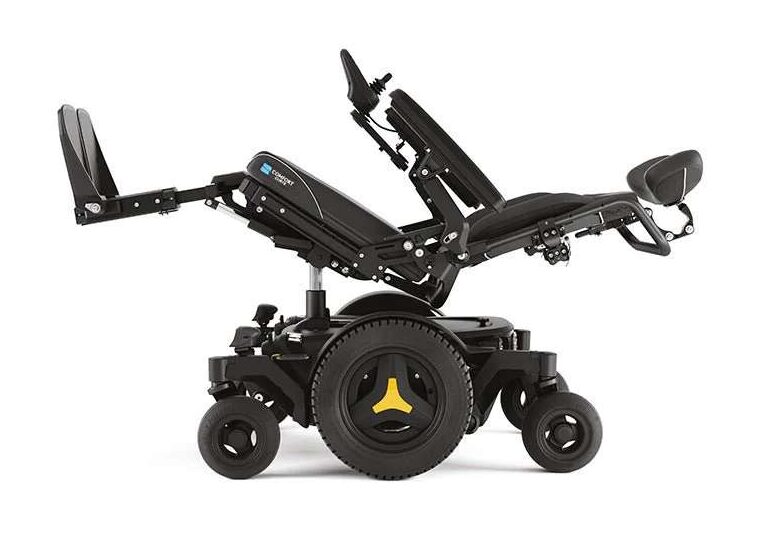
Look for seating systems with adjustable tilt-in-space, recline, and headrest support. Early on you might only need some of the features, but later full postural control becomes essential for comfort, pressure relief, and breathing.
Tilt-in-space and recline
As the trunk and neck muscles weaken, being able to tilt the whole seat (rather than just reclining the backrest) helps redistribute pressure, ease fatigue, and support safer positioning for eating, resting, or conversing.
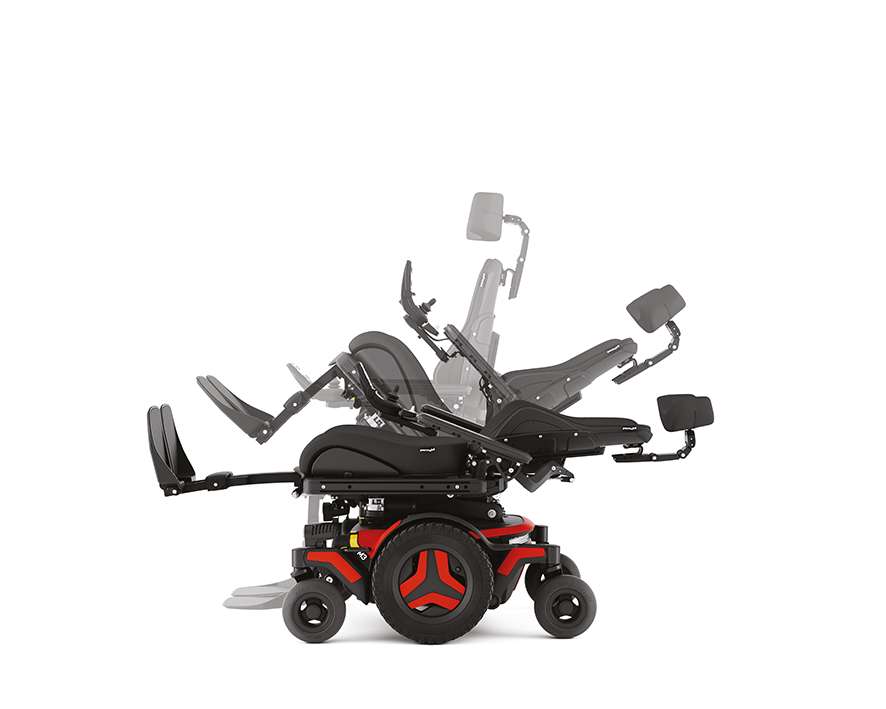
Permobil M3 Corpus Electric Wheelchair
Powered seat elevation and standing function
A powered stand or elevate function can help with transfers, eye-level conversation, and some of the secondary health benefits of weight-bearing, for as long as it remains safe and comfortable to use.
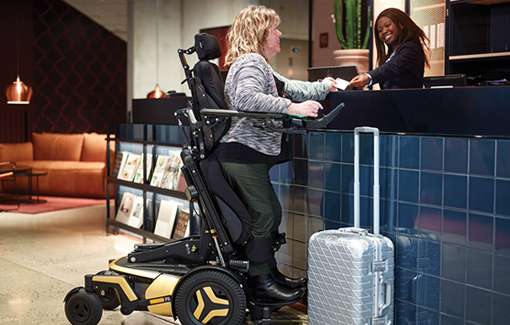
Ventilator and equipment mounting
Many people with MND use ventilation or communication equipment as the condition progresses. A powerchair that accommodates a ventilator tray or mounting points for a laptop is extremely useful for this purpose.
Robust battery range
Fatigue is a common issue with MND, so having a chair with a longer battery range reduces the burden of planning journeys around charging.

Attendant controls
As hand and arm strength reduces, having the option of dual or attendant controls means a carer can safely take over navigation of the chair.
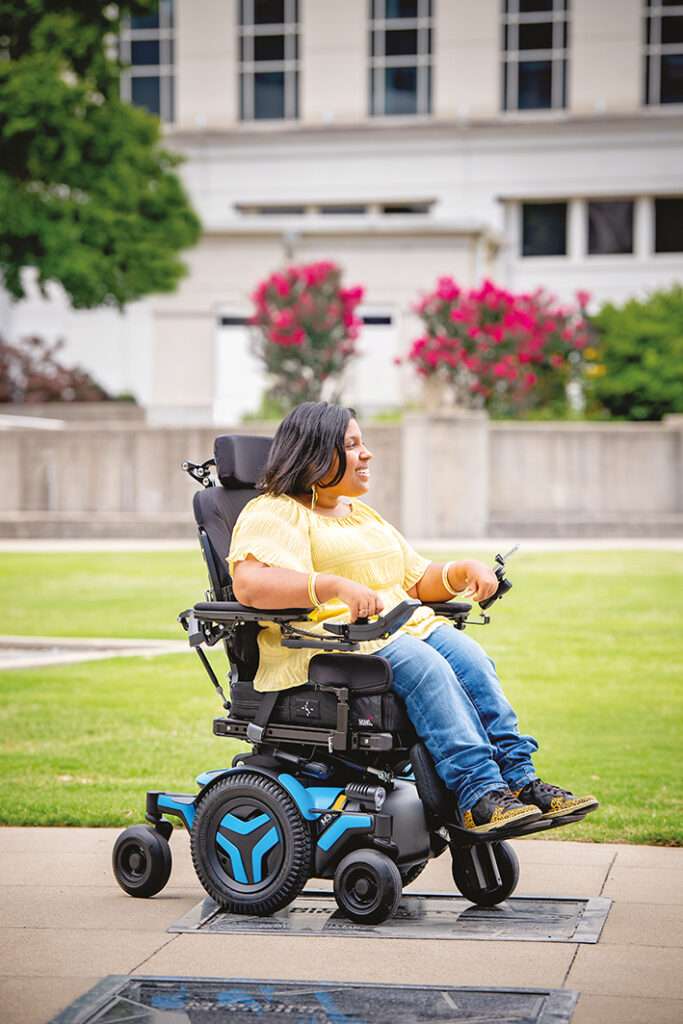
Permobil M3 Corpus Electric Wheelchair
Arrange a free wheelchair assessment
No-obligation seating advice
Alternative Access and Control Options
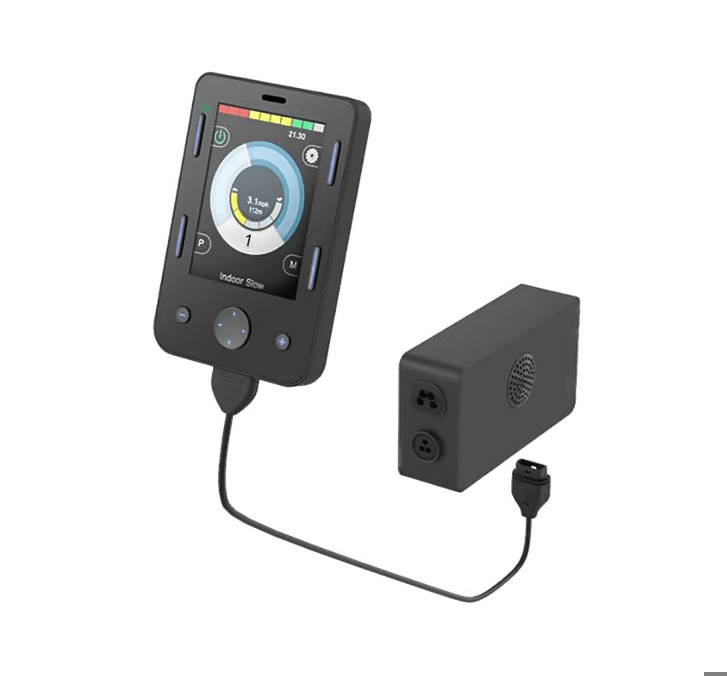
One of the most important considerations for MND is how the chair will be driven as hand dexterity changes. A standard joystick may work well initially, but many people eventually need to switch to an alternative method.
Drive control options in our Permobil range include:
- Compact or mini joysticks for reduced hand strength or range of movement
- Chin controls for people with limited arm function but good head control
- Head arrays for more advanced hand and arm weakness
- Sip-and-puff or switch controls for the most advanced stages
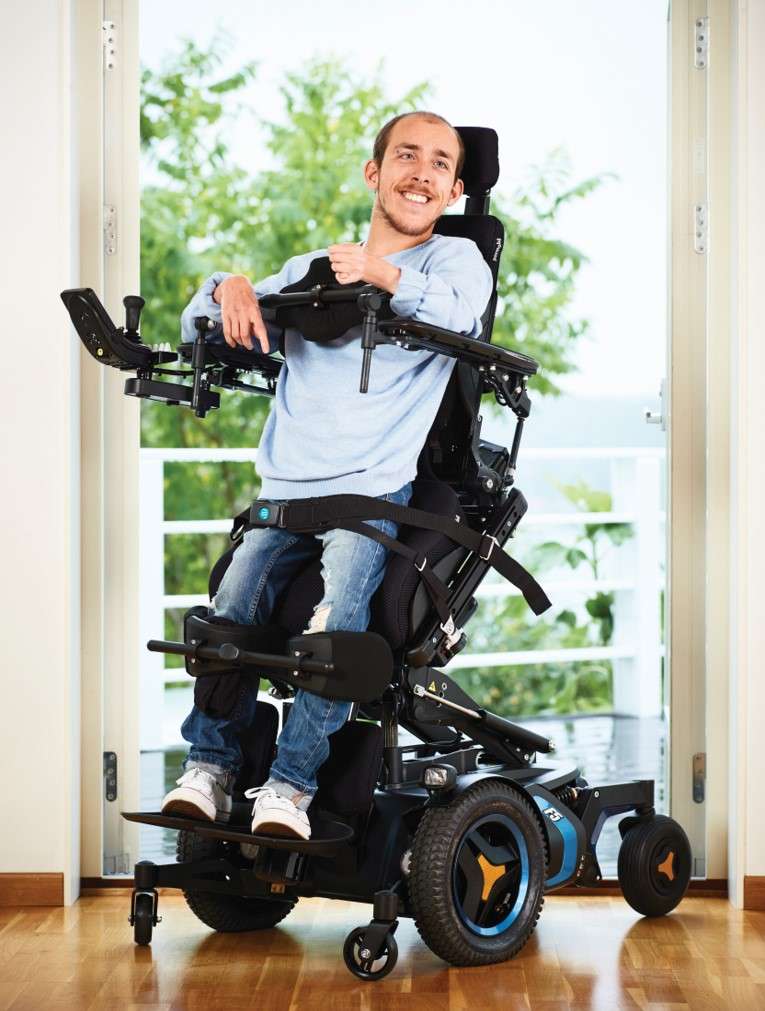
The key benefit of choosing a powerchair built on a flexible electronics platform (such as Permobil’s R-Net system with the Omni2 control interface) is that these alternative controls can often be fitted to the same base chair, rather than requiring a new wheelchair when needs change.
Our Recommended Electric Wheelchairs for MND
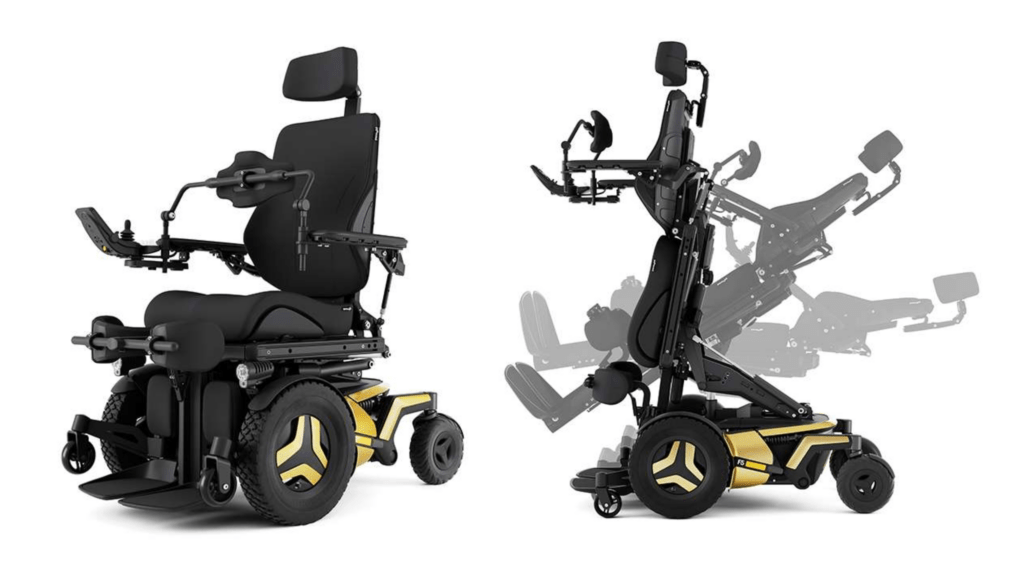
Permobil F5 Corpus VS
A strong all-round choice for MND, combining full postural adjustment (tilt, recline, elevate) with a powered standing function, full suspension for comfort, and compatibility with alternative control interfaces as needs progress.
Permobil F5 Corpus Standing Wheelchair VS Standup Corpus
Permobil M Corpus VS
A mid-wheel drive alternative offering the same level of postural adaptability and powered standing, with a tighter turning circle that suits smaller homes and indoor manoeuvring.
Permobil M3 Corpus / F3 Corpus
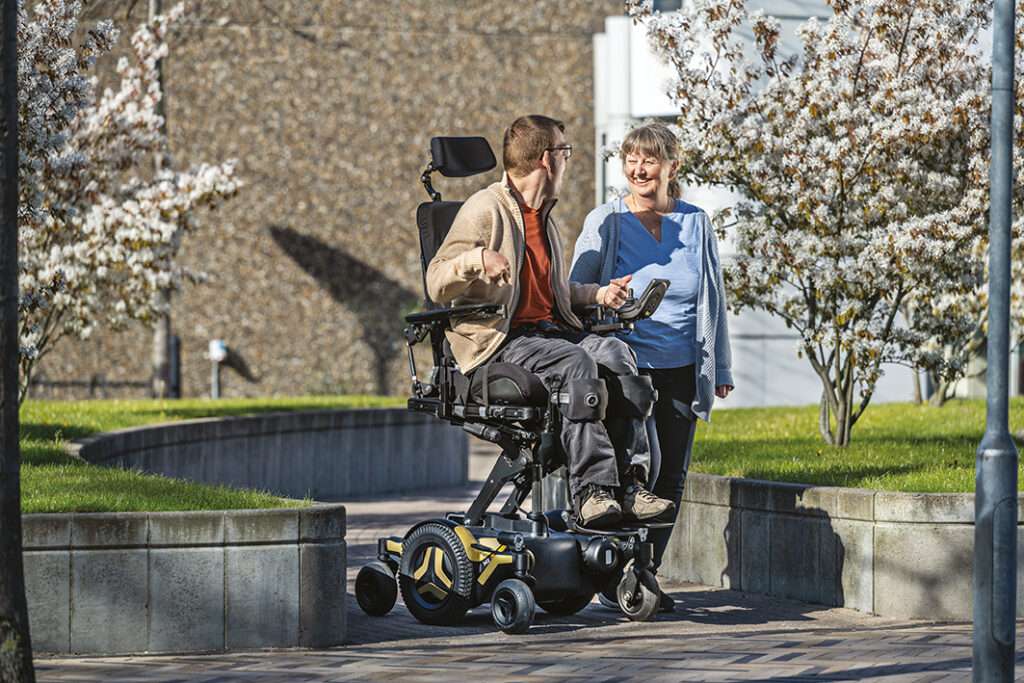
Simpler, more compact models that still offer core tilt-in-space and recline functionality, well suited to those earlier in their diagnosis who want a capable but less complex chair to begin with. Choose from mid-wheel drive (M3) for a tighter turning circle and extra stability on rougher terrain, or front-wheel drive (F3) for kerb-climbing and a smoother ride.
Whichever chair is chosen, we’d always recommend specifying it with:
- Full tilt-in-space and power recline
- Compatibility with alternative drive controls (even if not needed immediately)
- Space and mounting provision for future equipment such as ventilators or communication aids
- Attendant control capability
Permobil M3 Corpus Electric Wheelchair
Funding and Next Steps
Many people with MND are supported by a case manager or funded through NHS wheelchair services, charitable grants, or the MND Association. Because needs can change quickly, we’d always recommend an assessment as early as possible after diagnosis. This allows us the to specify a chair with enough flexibility built in from day one, rather than reacting to changes later down the line.
If you, a family member, or a client has been diagnosed with MND and would like to talk through wheelchair options, our specialists are happy to help with a free, no-obligation assessment.
Recommended Products
Permobil F5 Corpus VS Electric Wheelchair
Leading the way in electric wheelchairs, the Permobil F5 Corpus VS standing wheelchair is a solution that enables users to stand with confidence, ride in comfort, and experience significantly improved health outcomes.
Enquire About This Wheelchair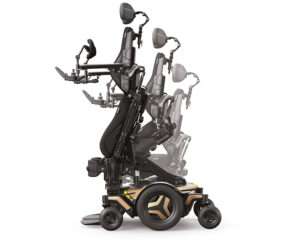
Permobil M Corpus VS Electric Wheelchair
The Permobil M Corpus VS electric wheelchair brings a new dimension to power standing, also offering maximum stability, traction, ride comfort and manoeuvrability with a mid-wheel drive base.
Enquire About This Wheelchair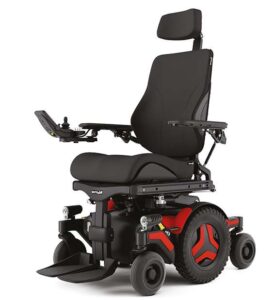
Permobil M3 Corpus Electric Wheelchair
The Permobil M3 Corpus Electric Wheelchair is made to help you achieve more.
Enquire About This Wheelchair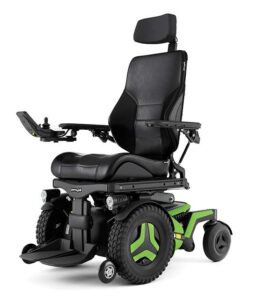
Permobil F3 Corpus Electric Wheelchair
Your compact electric wheelchair to enable easy and fast movement around urban spaces and crowded areas, with an impressively tight turning circle, levels of agility not seen before, and all the standard adjustability and movement features offered by the premium Permobil range.
Enquire About This WheelchairFrequently Asked Questions