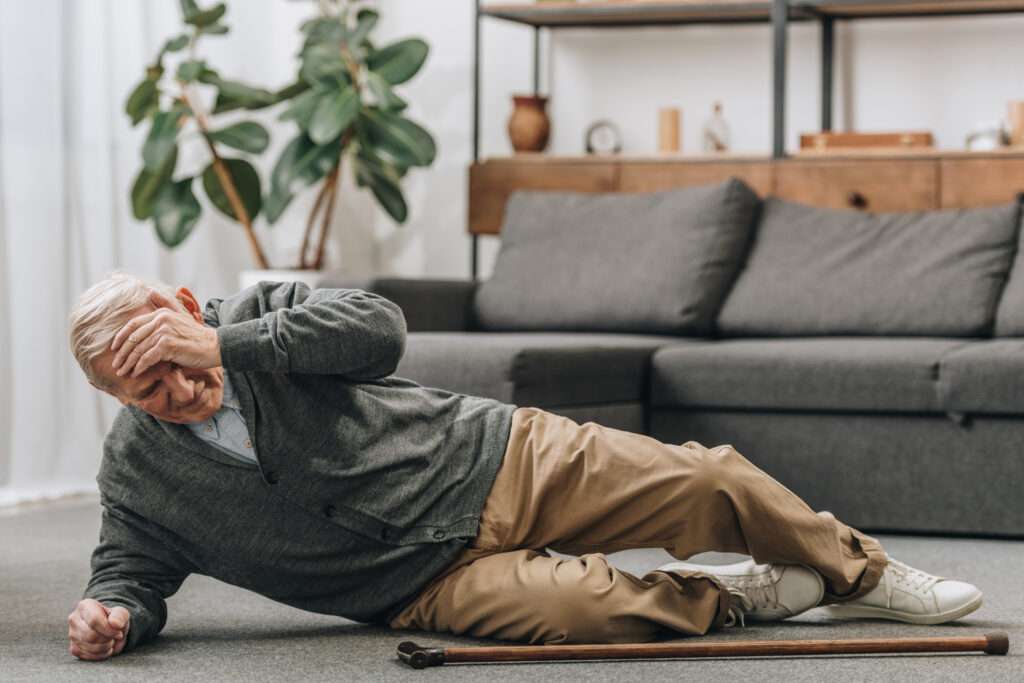
Elderly and vulnerable people living at home need external support in the event of a fall, which may involve calling the emergency services if friends or family are not available to assist them.
Ambulance services need the right lifting equipment at their disposal to provide a fast, effective response in the event of a fall, lifting the patient in a safe, hassle-free way and preventing ‘long lies’.
In this article we compare two lifting devices used by ambulance services in the UK, the Raizer M lifting chair and Mangar Elk lifting cushion, to see which performs best in emergency situations.
Jump straight to…
Getting Fallers Back on Their Feet
A ‘long lie’ occurs when a faller is unattended for more than an hour, which can exacerbate any injury sustained by the fall and lead to health complications such as pressure sores and respiratory problems, even if no injury was sustained by the fall itself.
This can be very detrimental to elderly people’s health, particularly if they have existing comorbidities, and may result in hospital admission which can place them at further risk of deconditioning and infection.
Therefore, responding quickly to falls and getting fallers back to their feet quickly and safely is of paramount importance for emergency services.
Here we compare the Raizer M and Mangar Elk, to see which is the most reliable and effective in time-critical falls response situations.
The Raizer M Lifting Chair
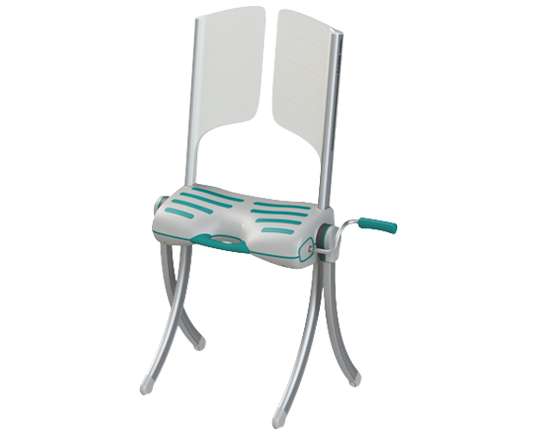
The Raizer M is the manual version of the Raizer lifting chair, a mechanical falls lifting device that fits together around the patient and lifts them to a seated position from the turning action of the back legs.
How it Works
The Raizer M fits together around the patient, by inserting the leg and backrest sections into the central seat unit, which slides underneath the patient’s legs. The lift works by turning the crank handle, which rotates the wheeled back leg downwards and cantilevers the patient into a sitting position.
Watch the video below to see the Raizer M in action!
Pros
Single-user operation – the Raizer is a relatively foolproof device, easy to assemble and disassemble and only requires one person to operate. No training or manual handling skills are required.
Quick deployment – the Raizer is immediately ready for use without any prior preparation or battery charging. It assembles and disassembles within seconds and performs a 60-second lift.
No manual handling – the chair assembles around the patient while they are in a lying position on the floor. The lift is self-supported so the operator does not need to use manual handling techniques to support the patient’s body. This reduces the risk of physical strain and injury for both carer and patient.
Unlimited number of lifts – the Raizer M does not have any electronics or batteries, meaning it can be used over and over again performing the same safe and steady lift, and is always ready for action.
Lightweight and portable – the components fit neatly into two separate carry cases which are easy to lift, or can be attached to a trolley for longer distances.
No servicing requirement – the simple mechanics of the Raizer M mean it doesn’t require servicing and it comes with a 2 year warranty.
Silent lift – there is no motor noise, creating a calm, quiet environment for the patient.
Cons
Weight limit – with a 23 stone (150kg) weight limit, the Raizer M is not suitable for bariatric patients.
Slower lift – the manual lift takes longer to operate than the electric Raizer 2
Small entrapment risk – there is a small risk of entrapment at the beginning of the lift, although this is negligible given that the carer is always in control of the turning handle. Keeping clothing out of the way and folding the patient’s arms across their chest mitigates this risk effectively.
Summary
Pros | Cons |
Single-user operation | 23 stone weight limit |
Quick deployment | Slower lift |
No manual handling involved | Small entrapment risk |
Unlimited number of lifts | |
Lightweight and portable | |
No servicing required | |
Silent lift |
Discover Raizer M Lifting Chair
The Mangar Elk Lifting Cushion
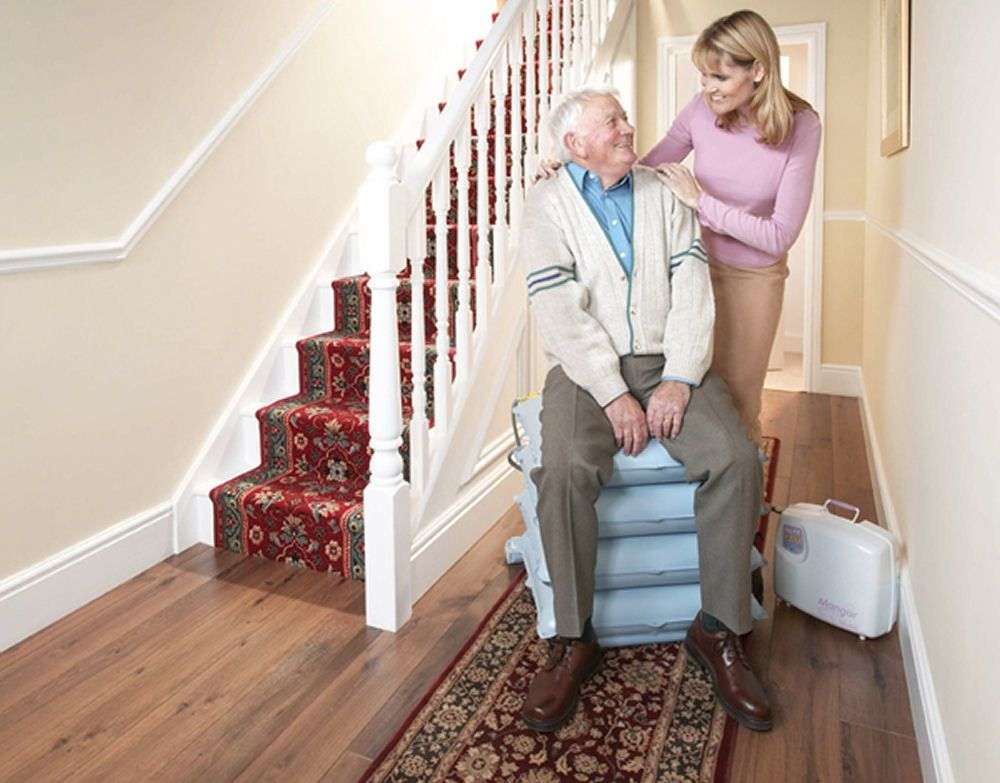
The Mangar Elk is a compact lifting cushion that inflates underneath the patient and lifts them to a sitting position.
The cushion is attached to the battery powered compressor, and each of the four sections is inflated in sequence, raising the fallen person from the floor in increments.
Pros
Single-user lift – the cushion only requires one carer to set up and operate, freeing up staff resource.
Reduces shear friction – the inflatable cushion helps spread the weight of the patient and provides a comfortable surface, reducing the risk of shear friction on the patient’s skin.
Robust material – made from a similar material to lifeboats, the cushion is very robust so can be used outdoors if required.
Compact and lightweight – the compressor and cushion are compact and lightweight so can be transported easily.
70 stone weight limit – the high working load makes it ideal for bariatric patients.
Cons
No back support – the cushion only supports the patient underneath their body, as there are no side or back supports to stabilise the patient as they are being lifted.
Destabilising for patients with less core strength – if the patient has a weak core or tends to slump to one side, the lift can cause instability. The patient needs to be in a sitting position on the floor before the lift can begin, which may not be possible if they have fallen in a confined area.
Manual handling – the operator needs support the patient at the same time as operating the lift, to help them maintain their balance as they rise, causing more strain for the operator.
Slower lift – the entire lift takes 3 minutes
Noisy lift – the noise of the compressor can be distressing for some patients
Low number of lifts per charge – the Elk only carries out 8 lifts on a single charge.
Battery charging – the batteries need recharging after 8 lifts and may lose charge if left unused, making the equipment inoperable.
Summary
Pros | Cons |
Single-user lift | No back support |
Reduces shear friction | Can destabilise patients |
Robust material | Manual handling |
Compact and lightweight | Slow 3-minute lift |
70 stone weight limit | Noisy lift |
8 lifts per charge | |
Batteries need charging regularly |
Raizer M vs Mangar Elk
The Raizer M is quick and foolproof to assemble, and no manual handling training is required. Its speed and practicality make it ideal for high call volumes, and it is compact and lightweight so easy to carry up and down stairs between calls. The quick and unlimited lift capacity makes it ideal for busy ambulance shifts.
The Elk has a higher weight limit so is more suitable for bariatric patients. However, it requires more input from the operator, particularly for patients with poor postural control. The slower lift makes it more time-consuming, slowing first responders down on busy shifts. There is also the risk of the compressor losing charge while out on call, or exceeding the 8 lifts before being able to recharge, making it impractical for busy periods. One ambulance trust told us that they wanted to stop using devices that needed charging due to equipment failures when out on shift.
Request a Demonstration
Conclusion
Our verdict is that the Raizer M is the best falls lifting device overall for ambulance services, due to its speed, practicality and unlimited lift capacity on busy shifts. As it doesn’t have any electrical components, it is available for use at any time, guaranteeing a reliable response time.
Frequently Asked Questions (FAQs)
How does the Raizer M lifting chair work?
The Raizer M chair fits together around the patient while they are lying on the floor. A manual crank rotates the back legs, smoothly lifting the patient into a seated position without any manual handling from the operator.
What is the Mangar Elk emergency lifting cushion?
The Mangar Elk emergency lifting cushion is an inflatable lifting device that raises a fallen person from the floor by inflating four air chambers in sequence using a battery-powered compressor.

Ralph has many years' experience in the healthcare sector. In a previous life he worked in finance, and his spreadsheet skills come in handy for all the analysis and research he does as he investigates topics and solutions for some of the world's most complex healthcare conditions and challenges. Aside from writing in-depth articles and organising webinars and interviews with top healthcare professionals, Ralph also administrates Vivid's "Healthcare Pioneers Board", a large group of healthcare specialists with multiple disciplines, who are working together to improve care for years to come.