How to Help an Anterior Pelvic Tilt


An anterior pelvic tilt is a postural abnormality where the pelvis is tilted forwards when seated, causing an exaggerated lumbar curve.
There are ways to fix this issue and support the pelvis in a natural alignment with specialist seating.
This article looks at what causes anterior pelvic tilt, how to correct it and what seating features can be benefit someone with this postural issue.
Jump straight to…
What is an anterior pelvic tilt?
The pelvis is the foundation of good posture, and there are several pelvic presentations that can cause postural issues with the spine and seating in general.
These can be identified in a seating assessment by feeling where the client’s PSIS and ASIS are, with their consent. These are the bony prominences at the front (ASIS) and back (PSIS) of the pelvis. To achieve good posture in a chair, these need to be level, or as level as possible. You can read more about pelvic positioning in our in-depth article, How to Achieve Good Posture with Specialist Seating.
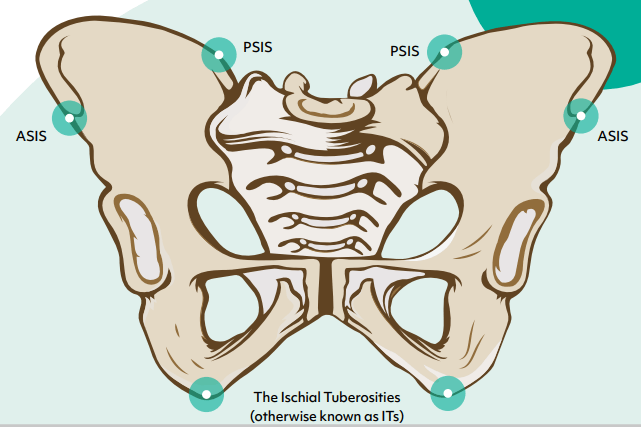
An anterior pelvic tilt is where the pelvis is tilted forwards, with the PSIS higher than the ASIS. This causes the lower back (lumbar region) to curve inwards more, and the buttocks to protrude out. It is often associated with lumbar lordosis, as it causes an exaggerated lumbar curve.
Types of pelvic postural issues
Postural Deformity | Definition |
Posterior Tilt | PSIS lower than the ASIS (pelvis tilted backwards). This is sometimes called ‘sacral sitting’. |
Anterior Tilt | PSIS higher than the ASIS (pelvis tilted forwards). The opposite to posterior tilt, and not as common. |
Pelvic Obliquity | One ASIS is higher than the other side, causing the patient to lean to one side. This is not considered a form of pelvic tilt, being side to side rather than front to back. |
Pelvic Rotation | One ASIS is further forward than the other, leading to windswept legs. |
What causes an anterior pelvic tilt?
There are several factors that can lead to an anterior pelvic tilt, some relating to the kind of chair being used and others related to wider health issues.
- Inappropriate back support – an unsuitable backrest or protruding lumbar section can push the lumbar section of the spine forwards.
- Anterior slope on seat – if the seat isn’t raked or sloped slightly downwards, this will not only lead to discomfort and shear friction but cause the user to compensate by leaning backwards, causing the pelvis to tilt forwards.
- Extensor patterns of activity – certain muscles around the hips like the hip flexors can tighten while others remain relaxed, particularly when sitting in this position for a long period of time. This pulls the front of the pelvis downward, and weak gluteal or abdominal muscles fail to counteract this.
- Lumbar lordosis – as well as being an effect of anterior pelvic tilt, it can work both ways by being a cause, if someone has an exaggerated lumber curve in the spine.
- Obesity – plus-sized patients may have a large pannus which pulls the abdomen forward, resulting in the tell-tale inward lumbar curve and forward tilt in the pelvis.

Is anterior pelvic tilt serious?
While anterior pelvic tilt is not a serious condition, being stuck in an unnatural sitting position for a long time can cause discomfort, particularly if the chair is causing the problem, and can lead to issues like spinal deformities and tight muscles around the hips and core area.
The longer it goes on the harder it is to correct, so early intervention is key to reverse this condition.
Need to Correct Anterior Pelvic Tilt?
Book a seating assessment
How to fix anterior pelvic tilt
Correcting anterior pelvic tilt should not be forced, but rather a combination of therapeutic exercises and seating interventions to bring someone’s sitting posture back to a more natural position. This depends on whether the posture is fixed or correctable.
If it is correctable than seating should be reviewed first to check the seat sizing is correct, then if the seat rake is at the correct angle to support a relaxed posture.
Additional features like tilt-in-space are important, as the backwards tilt uses gravity to help the lumbar region relax back into the chair, and straighten the pelvis.

Avoid seating with a pronounced lumbar contour in the backrest, as this will maintain the excessive lumbar curve.
A dynamic backrest is important to adjust cushioning around the lumbar region and help encourage a more natural spinal curve. This can be done easily with the waterfall backrest, as the position of each cushion is adjustable and wadding can be removed in the lumbar section to help the person sit back into the chair more.

Waterfall lateral backrest – Lento Care Chair
There are stretches and exercises that can be done, such as seated pelvic tilts and leg raises, to build control and pelvic mobility. These can be advised by your physio and then supported by correct seating, to maintain good posture over the long term.
Not Sure if Your Seating is Right?
Book a free postural review
Recommended Chairs for Anterior Pelvic Tilt
The choice of seating depends on whether the tilt is fixed or correctable, and how much time the person spends sitting, for pressure care considerations.
A seating assessment is the best way to specify the right chair, with the right seat dimensions, support accessories and positioning for each individual.
Made to Measure Rise & Recline Armchair
For someone who can still stand and transfer by themselves, a made to measure recliner is a great option for the home environment. These can be built to the right dimensions for the user and tailored to the best fit, with the right backrest type to provide the best positioning for an anterior pelvic tilt.
The tilt-in-space and sit-to-stand functions come as standard, helping redistribute weight and neutralise pelvic alignment, as well as stand up from the chair easily.

Lento Care Chair
For people who are hoisted for transfers, the Lento Care Chair provides more comprehensive postural support. All seat dimensions and arm height are individually adjustable, without tools. The magnetic backrest cushions are interchangeable, including waterfall options that can be repositioned to alter support around the lumbar region. Tilt in space, either manual or electrically operated, can be used to relax the lumbar curve while maintaining a stable sitting angle.

Lento Care Chair
Lento Cove Care Chair
The Lento Cove Care Chair is available for more complex postural needs, with a highly configurable SpineSupporter™ backrest that can accommodate any spinal deformity. As well as all the adjustment features of the Lento Care Chair, the Lento Cove backrest can be tailored to a high degree of precision with the toolless adjustment system. As the anterior tilt improves, minute adjustments can be continually made to support the user’s position without forcing the process.

Lento Cove Care Chair
Conclusion
Anterior pelvic tilt can create discomfort and spinal misalignment, particularly when someone maintains this posture over a long period of time.
The first step is to understand whether the pelvic position is fixed or correctable, then seating can be reviewed to check sizing, seat angle and back support. The right specialist seating along with physiotherapy exercises can help support a more natural sitting position.
Recommended Products
Made To Measure Rise & Recline Armchair
The Brecon is a classic, home style electric riser recliner armchair with comfortable scroll arms and many different backrest options to meet your needs.
Enquire About This ChairLento Care Chair
The Lento Care chair has been clinically designed to address the complex care needs of anyone over 5’ 2”, particularly those who need to be hoisted.
Enquire About This Chair
Lento Cove Care Chair
The Lento Cove Care Chair provides a premium level of postural support, for even the most complex needs.
Enquire About This ChairFrequently Asked Questions


