Best Chairs for Falls Prevention


The risk of falling is a common challenge for elderly people living at home. This is not only due to the impact on their own health, but the effect on a partner who may be dependent on them for care, and the pressure on family members to be on call for assistance.
If you are worried about an elderly parent or relative living by themselves who is at risk of falling, you are certainly not alone in this, it is a widespread concern and one that is difficult to deal with.
At Vivid Care we have invested a significant amount of time and research into the falls endemic, researching solutions and supporting regional initiatives like Hull FIRST and Yorkshire Ambulance Service to bring systemic changes.
In this article we look at some of the practical tools and strategies you can implement at home to reduce the risk of falls.
Jump straight to…
Falls Statistics
Health statistics underscore the extent of this problem. 60% of falls in the elderly occur at home, costing the NHS £435m each year.
Unfortunately, many of those admitted to hospital following a fall don’t return to living independently. This can be a constant source of anxiety for older people wanting to maintain their independence at home. A recent survey highlighted that 96% of over 75s would rather stay independent in their own home than move into family or residential care.
Moving into managed care can be seen as a loss of independence for some, as well as a loss of dignity and pride in losing their own space that holds many memories and provides structure in their daily life. Obviously if care needs are too great to be managed at home, then receiving dedicated care in a managed facility would be preferable, but unless this stage is reached there are many solutions to maintaining independence at home, as we cover in this article.
Causes of Falls in the Home
Falls in the home can be caused by a combination of factors, from declining physical health to the home environment itself.
Physical health problems that contribute to falling usually include dizziness, balance issues, weakened muscles or hearing/vision loss.
- Dizziness and balance issues can be a factor of postural hypotension, which is a drop in blood pressure after lying or sitting down. They can also be a side effect of long-term health conditions like heart disease and dementia, or certain medications.
- Weakened muscles are related to a decrease in muscle mass as the body ages, known as sarcopenia. This, associated with slower reflexes, can make it difficult for older people to rectify their balance if they start to take a tumble.
Patient Hoists and Falls Recovery
Our specialists will help you find the perfect solution
Impact of Falls in the Home
Hip fractures are a risk for elderly people prone to falling, which is increased for people with osteoporosis (low bone mineral density). Other factors that increase the risk of fractures are low BMI, poor diet, higher alcohol intake and diabetes. Hip fractures are responsible for 1.8m hospital bed days and £1.1bn in hospital costs every year, increasing one-year mortality rates by 18-33% and having negative effects on daily living activities.
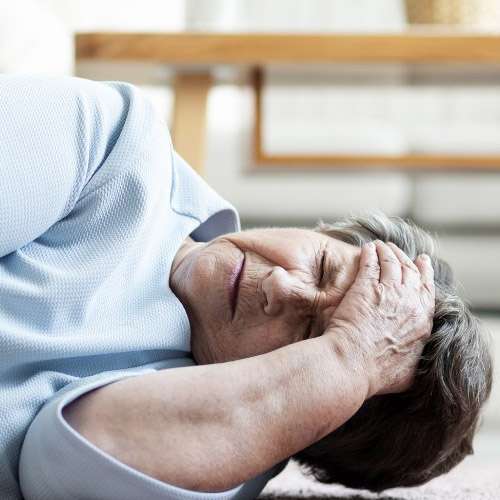
Another concern for elderly people is when they are left unattended after a fall for longer than an hour. This is classed as a ‘long lie’ and can have serious health consequences.
It is important to get assistance quickly to someone who has fallen at home, particularly if they are living alone, but there are ways of significantly reducing the risk of falls occurring by using some of the falls prevention strategies discussed in the next section.
Ways to Prevent Falls at Home
While physical health problems can sometimes be unavoidable due to the natural consequences of ageing, there are many changes that can be made to the home environment which are often overlooked but can make things a lot safer.
Home Safety Tips to Support Elderly Care at Home
Here are some failsafe ways to improve the home environment and enable elderly care at home.
Keep areas clean and tidy
Messy, poorly-lit environments with a lot of low-lying objects and trailing wires can make rooms hazardous for people who are unsteady on their feet. Keeping the area well-lit and free of clutter is very important. For people with dementia or Alzheimer’s, too many objects or colours can disorientate them, so keep patterns and layouts simple and ‘declutter’ walkways wherever possible. Keep trailing wires and phone lines out of the way so they don’t present a trip hazard.
Wear suitable footwear
Wearing comfortable and supportive footwear is very important for people who tend to be unsteady on their feet. Cosyfeet shoes have an extra wide fitting and Velcro fastenings that make them easy to wear.
Use walking aids
Using walking aids such as sticks or Zimmer frames gives people that extra support and peace of mind if they are unsteady on their feet.
Keep the bathroom safe
Bathrooms are a hazardous area for fallers. Make sure bathmats are used to keep surfaces dry and provide grip, and install grab rails and toilet frames within reach to assist movement.
Get a stairlift
Stairlifts are a lifesaver for people who sleep upstairs, and are relatively easy to install on curved or straight staircases.
Struggling With Falls?
Our specialists will help you find the perfect solution
VELA Chair
The VELA Activity Chair is designed for preventing falls at home, giving people the ability to move from one position in the house to another in a seated position. With ergonomics at the heart of its design, it has a range of features to provide users with the stability they need, whether they are sitting stationery, performing leg exercises, or ‘walking’ the chair around on the wheeled castors.
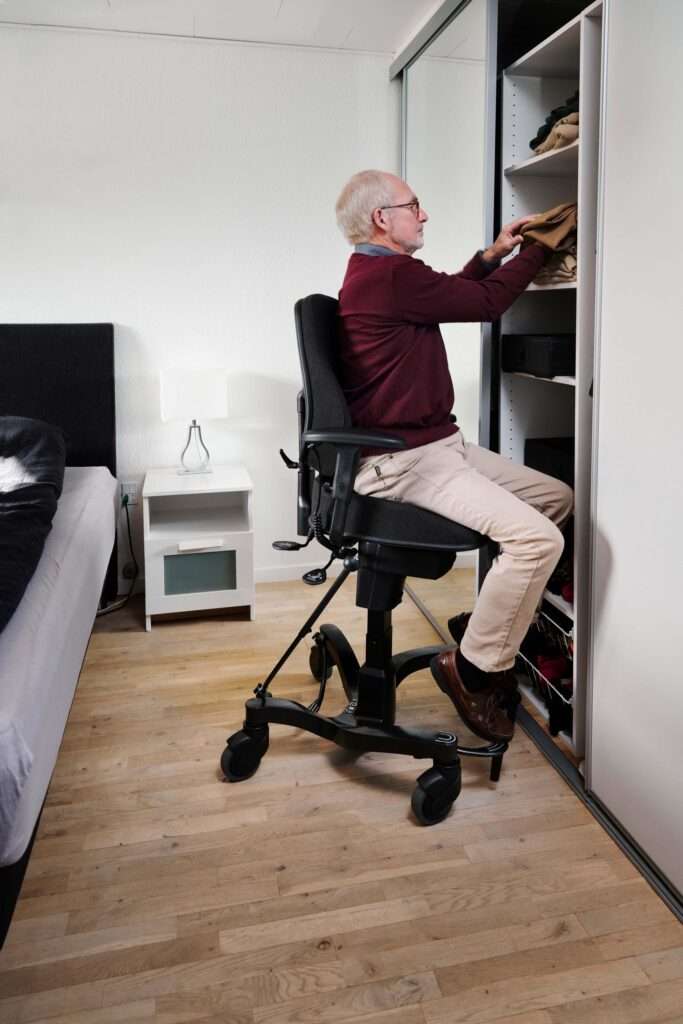
The VELA chair gives elderly users confidence and prevents falls while going about their daily activities at home.
Secure Sit-To-Stand
The standing mechanism provides a safe transition from sitting to standing position, by following these simple steps:
- Apply the handbrake
- Raise the seat using the electric button on the armrest
- Gently lower your feet to the ground while being supported by the chair.
Integrated Handbrake
The chair wheels have a secure locking mechanism, giving ultimate stability and increasing confidence.
Height elevation
The easy-touch buttons provide a simple height adjustment to help users access different height work surfaces and adjust for activities like leg exercises. This gives users the ability to perform different tasks around the home in the same chair.
The smooth electric lift action puts control in the hands of the user, preventing dizziness or loss of balance when standing up.
Glide-about castors
The large swivel castors make moving and adjusting the chair smooth and easy, so users can ‘walk’ the chair around the home.
View our VELA Chairs for the Home
Our specialists will help you find the perfect solution
Enhanced independence and safety at home
The VELA chair gives less-mobile users the ability to move around home environments on the same level, allowing them to access different height surfaces and go about their daily routines with ease, whilst staying safe from falling.
The stability and security of the chair reduces their fear of falling, a critical psychological factor in increasing their confidence and breaking down barriers to independence. This is crucial in allowing the elderly to stay safe in their home, improving their quality of life.

Falls Assistance
Even with the best efforts to prevent falls within the home, they still can and do occur. Having the right equipment at hand for when this happens takes the emotional trauma and danger to health out of the situation.
Raizer M
The Raizer M is the manual version of the Raizer lifting device, which costs significantly less than the electric version and works by turning a crank handle to gently lift the faller into a sitting position. It assembles and breaks down very easily, and is stored in a compact carry case, so can be kept in a cupboard to be on hand when needed.

Raizer M lifting chair
Falls Teams
A lot of Falls Teams use the Raizer when responding to falls in the community, such as Vitaline in Blackpool. It deploys in seconds and enables single-handed care, allowing the parademic to focus on the welfare of the faller.
Summary
Making the home environment safe is a key part of effective falls prevention strategies for people living in their own homes. Coupling this with enabling equipment like the VELA Activity chair helps people to maintain their independence and dignity into old age.
Speak to our team today
Our specialists will help you find the perfect solution
For ongoing floor-recovery equipment support, see our Raizer servicing, repairs and service contract page.
Recommended Products
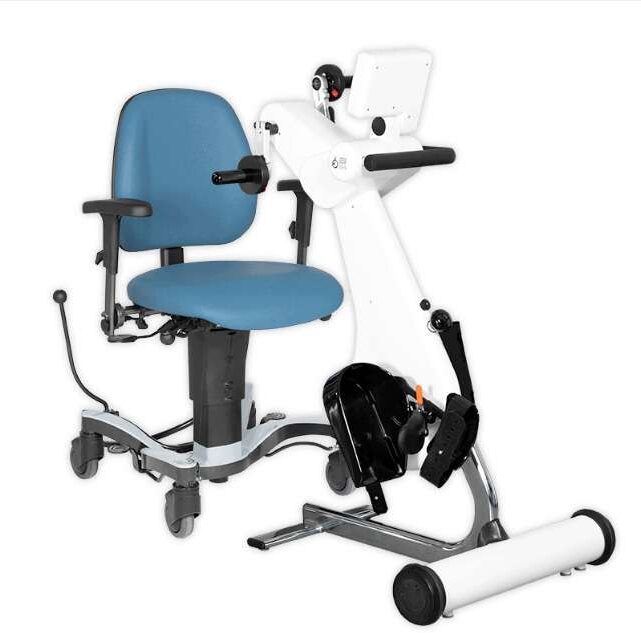
VELA Activity & Exercise Chair
Designed for training and rehabilitation, the VELA Activity Chair provides a safe exercise chair with an anti-tip bar that provides extra stability even during powerful movements, for example, when doing exercises using the arm and leg trainer.
Enquire About This Chair
Raizer M – Manual Emergency Lifting Chair
The Raizer M is a manual lifting chair that allows a single person to quickly lift a fallen person from the floor into a sitting position with a turning handle on the side of the seat.
Enquire About This ChairFrequently Asked Questions