What is Lateral Support?


Lateral supports are an extremely useful feature for managing postural alignment in specialist seating. As seating specialists, we use this postural feature extensively for a wide range of clinical applications.
This article looks at how lateral supports are used in seating to improve posture and prevent leaning.
Jump straight to…
What is lateral support?
Lateral supports, otherwise known as trunk supports, thoracic supports or trunk stabilisers, are used widely in specialist seating to keep the spine and upper body more centrally aligned in the chair, and prevent slumping, slouching or leaning to one side.
Types of lateral supports
There are many different types of lateral support, depending on their application. Some are fixed in position, others are adjustable and removeable like backrest wedges, or built into the backrest like the lateral waterfall backrest.
Fixed and swing away supports provide firmer support for people with more severe postural needs, and are often incorporated in wheelchair seating systems. They can be mounted to the frame of the chair and removed or swung away when needed, for example side transfers.

Permobil M3 Corpus Electric Wheelchair
Hip and pelvic guides are sometimes used to guide the pelvis into the right position. These are lap straps or belts that are fastened around the legs or pelvis area. These can be considered as restraints, so are only used if needed to keep the client safe or in their best interests.
The advantages of lateral trunk supports vs hip/pelvic guides is they are not restrictive, and bolster sideways support to improve trunk alignment. They can be adjusted or have extra padding added for maximum comfort.

Lateral trunk supports
How can I prevent lateral leaning in a wheelchair?
A lateral lean is a common postural presentation we see in our assessments, and something we are able to help and improve with specialist seating, even if posture is fixed and can’t be corrected fully.
The reason for leaning to one side can be due to a variety of causes, as covered in our article “What Causes Leaning in a Chair and How Do You Prevent It?”. It is often seen with clients who have had a stroke, or have neurological disorders like Parkinson’s or Cerebral Palsy.

Leaning is also something we can address in powered wheelchairs with seating systems like Spex. They have a range of trunk guides and supports that can be fitted to suit a client’s posture.
Fitting and adjusting wheelchair lateral support
Lateral trunk supports can be attached to the wheelchair backrest to support clients with postural asymmetries like scoliosis.
Upper leg (thigh supports) are used alongside the cushion under the armrest, to guide the thighs more centrally, and prevent hip abduction or rotation. These can be in the form of a pad with a cutout to accommodate the cushion.
Leg Laterals
Leg laterals are used for clients who legs abduct, rotate or sweep to one side. They are position either side of the legrest, or the legrest can be channelled to promote straighter leg alignment and keep the feet supported on the footplate.

Need Extra Lateral Support?
Book a seating assessment
Choosing a lateral support cushion or lateral support chair
Lateral supports in our riser recliners and care chairs can come in many different forms, as we cover in this section.
Waterfall Lateral Back
The waterfall lateral backrest features soft Dacron-filled cushions like the normal waterfall back, but the bottom cushion has side sections for more lateral support. This cushion can be swapped around with the middle cushion if more trunk support is needed.

Lateral Back
The lateral back offers good sideways support for those with trunk instability. The sides are longer than the lateral waterfall back, and soft-filled to allow for scoliosis and kyphosis. The lateral wings have a zip so the amount of wadding can be adjusted to suit the user.

Metal Lateral Supports
These adjustable metal laterals offer firmer support than lateral backrests, and come round from the back of the chair.

Backrest wedges
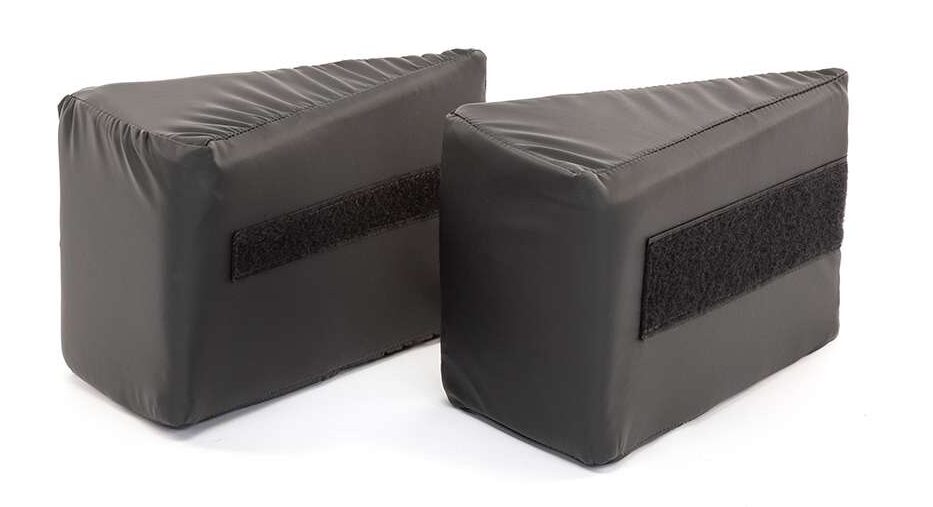
These handy wedges can be inserted behind the backrest to bolster sideways support without making the client feel restricted in any way. They come in 6 or 3 inch thickness and can be positioned wherever needed to suit the client.
Some chairs and accessories in our seating range have been developed specifically for spinal asymmetries:
SpineSupporter™ backrest
This backrest on our Lento Cove Chair was developed for the most complex postural presentations, with over 2 quadrillion possible configurations!
The three separate arms can all be individually moved side to side, up and down and contoured sideways using the 5-point adjustment pins.
The lowest arm has a pelvic hand support section to help stabilise the pelvis.

Lento Cove Care Chair
Cocoon backrest
The cocoon backrest provides support all the way up from the pelvis to the shoulders, for stronger leans.

Lento cocoon backrest
Horseshoe head cushion
Shaped like a horseshoe, this cushion supports the head from behind and around the sides to stop head droop which can pull the trunk to one side.

Struggling with Sitting Posture?
Book a free postural review
How do I know if I need lateral support?
Lateral support may be worth considering for someone who leans to one side, slumps, or slides out of position in a chair, and keeps needing to be repositioned.
Common signs include a visible lean that gets worse throughout the day, frequent repositioning, discomfort or pressure on one side of the body or pelvis, the falling to one side, or fatigue or digestion problems from sitting in a twisted or collapsed position.
The right type of lateral support depends on what is causing the lean, whether the posture is fixed or flexible, and how the person uses their chair day to day. Choosing the wrong support can be uncomfortable or even make posture worse, so it is best to have a proper assessment before buying.
Our seating specialists can assess posture, pressure and comfort and recommend the most suitable lateral support for your needs. Get in touch with our team to submit an enquiry and arrange a seating assessment!
Conclusion
Lateral supports are a simple but effective way to improve alignment and comfort in specialist seating. From fixed and swing-away trunk supports on wheelchairs to lateral backrests, wedges and cocoon backrests, there is a solution for most postural needs, even where posture is fixed and cannot be fully corrected.
The key is matching the support to the individual. A seating assessment will identify the cause of the lean and the right combination of supports to keep the person comfortable, safe and well positioned.
Frequently Asked Questions