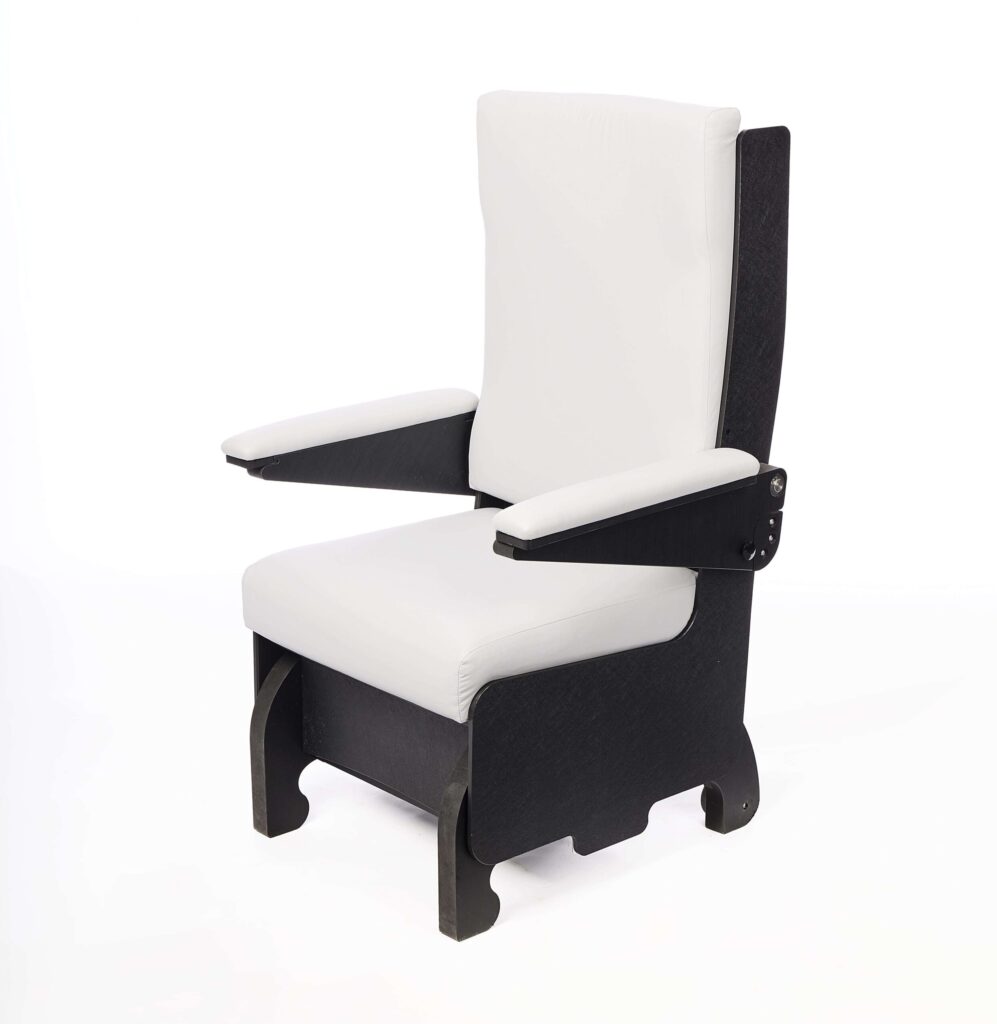
HiBack Bedside Chair vs Standard Ward Chairs


There are many variations of the traditional bedside chair throughout NHS hospitals in the UK, in patient waiting rooms and at hospital bedsides.
The common features throughout most high back (or high seat) chair models are as follows: a basic metal or wooden frame, a high backrest to support upright posture, and a hardwearing waterproof upholstery. Their simple design with an exposed frame and waterproof fabric makes them easy to clean, and vinyl upholstery can withstand heavy hospital use.
In this article, we carry out an honest comparison of some of the most commonly used bedside chairs throughout the hospital market, saving you the research work and giving you a comprehensive review guide to work from.
Jump straight to…
Deconditioning: The Clinical Background
When developing our own hospital bedside chair we carried out direct market research, speaking to many different ward managers and Moving & Handling specialists in acute care.
The clinical background to all of this is sitting out of bed, including how long patients should sit out for and why they go back to bed. See sitting out of bed: the step most patients can take before walking.
One problem that cropped up repeatedly was the reluctance for patients to sit out of bed during the day, even for periods at a time. Discomfort and pain when sitting and fear of falling were keeping patients in bed and contributing to the vicious cycle of deconditioning.
We used this feedback to develop a market-leading solution that resolved these issues, covered in more detail below!

Comparison of Different Hospital Bedside Chairs
Arvada
The Ocura Arvada chair is designed with patient comfort and adjustability in mind. Its ergonomic design provides a supportive high backrest and an adjustable seat height, accommodating users of different heights and mobility levels.

Benefits:
- The chair features an antimicrobial vinyl upholstery, which enhances hygiene and reduces the risk of cross-contamination.
- It is lightweight yet durable, making it easy to reposition while being robust enough for hospital use.
Drawbacks:
- Some users report that the adjustment mechanisms can be stiff or difficult to use, leading to strain for staff members.
- The chair’s lightweight design, while beneficial for moving, may feel less stable for patients with reduced mobility.
Atlas Patient High Back Arm Chair
Known for its robust frame and extra-wide seat, the Atlas chair is ideal for bariatric patients or those who require more space for comfort.

Benefits:
- Its padded armrests provide additional support, helping patients transfer in and out of the chair with ease.
- The chair’s height is adjustable, allowing staff to customise it for individual patient needs.
Drawbacks:
- Its heavy-duty construction makes it heavier than other models, which can make repositioning or transport more difficult for hospital staff.
- The wide seat may not be ideal for smaller spaces, such as compact hospital rooms or busy ward areas.
NRS Healthcare High Back Chair
This chair is among the most affordable options, making it a popular choice for hospitals with budget constraints.

Benefits:
- It features a sturdy metal frame and high backrest, providing essential postural support for patients.
- The seat and backrest are cushioned for comfort and are easy to clean due to the waterproof upholstery.
Drawbacks:
- The lack of adjustable height or tilt options makes it less versatile than other models.
- Some patients and staff report that the cushioning is too firm, leading to discomfort during extended use.
George Eliot Bedside Chair
The Roma Eliot chair is known for its classic design and solid construction, providing a dependable seating solution.

Benefits:
- Its padded seat and backrest offer a balance of comfort and durability.
- The chair is lightweight and easy to move, making it practical for busy hospital environments.
Drawbacks:
- This chair lacks adjustability features, which can be a significant limitation for accommodating patients with varying needs.
- The design, while reliable, is less ergonomic compared to newer models, potentially causing discomfort during prolonged use.
Common Pain Points Across the Range
While each of these bedside chairs has its strengths, certain pain points are consistent across the board:
Discomfort During Prolonged Use
Despite padded seats and backrests, many models fail to provide adequate cushioning or ergonomic support, leading to complaints of discomfort.
Risk of Falls
Chairs without secure armrests may increase the risk of falls, especially for elderly or mobility-impaired patients.
Difficult Adjustment Mechanisms
Stiff or awkward adjustment systems can result in repetitive strain injuries (RSIs) for hospital staff, who need to frequently adapt the chairs between patients.
Limited Durability
Some chairs struggle to withstand the heavy use and diverse demands of a hospital environment, leading to wear and tear over time.
Speak to our team today
Our specialists will help you find the perfect solution
In the next section of this article, we’ll discuss innovative solutions to these challenges and how our own high back chair sets a new standard in hospital bedside seating.
HiBack Bedside Chair
The HiBack Bedside Chair is unique in that there is nothing like it on the market – the only one of its kind!

It has been designed and manufactured exclusively by ourselves using direct market feedback to solve widespread issues with standard high seat chairs, including the following features:
Easy Height Adjustment
Adjusting the height of the chair is effortless with a simple turn handle. There is no need to tip the chair or adjust complex mechanisms on individual legs, removing strain and injury risk for hospital staff.

Adjustable Seat Dimensions
The seat depth can be adjusted from 19–21 inches and the back angle can be reclined as an optional extra.

Cutting-Edge Pressure Care
Levitex® foam seat cushions come as standard, upholstered with four-way stretch and breathable dartex fabric. The seat and back cushions can be adapted to the postural needs of each user with adjustable lumbar support and cushion positioning.
Modular, Ergonomic Design
Cushions can be interchanged for different sizes or colours, and the raked seat and angled backrest improve postural support. The replaceable components and hardwearing propolymer frame ensure longevity and ease of maintenance.
Infection Control Friendly
All surfaces are easily accessible for maximum infection control. The upholstery can be easily removed for machine washing, leaving the base of the chair exposed for deep cleaning.
Flipback armrests for side transfers
The arms can be flipped back to make transfers easier, and the chair is fully compatible with standaids.

Conclusion
Hospital bedside chairs are a critical component for patient comfort, safety and mobility during their hospital stay. Different models of hospital bedside chairs have their own strengths and weaknesses, however common pain points such as discomfort during prolonged use, difficulty with adjustment mechanisms, and limited durability have built a strong case for product innovation in this area.
Our HiBack Bedside Chair addresses these challenges head-on, offering features such as effortless height adjustment, customisable seat dimensions, cutting-edge pressure care, and infection-control-friendly surfaces. Designed with direct feedback from healthcare professionals, it sets a new standard for bedside seating, combining comfort, functionality, and durability in one innovative package.
If you have more specific questions about bedside chairs or the Vivid Care HiBack Chair, feel free to contact us!
Recommended Products

HiBack Bedside Chair
Say goodbye to compromise, and hello to a generation of bedside chairs with game-changing levels of easy adjustability, patient care, and comfort.
Enquire About This ChairFrequently Asked Questions