How Long Should Older People Sit in One Position?


Older people, particularly those with restricted mobility, may spend extended periods in a chair. First and foremost, it’s important they have seating that is comfortable and supports good posture, which is what we’re all about as a company.
Staying seated in the same position however can increase the risk of pressure sores, as we cover in this article. This gives rise to the question often asked by carers and patients themselves: how long is it safe to stay in the same position?
The answer can vary depending on the person, and the information we provide in this article is general guidance, so shouldn’t be used without specific advice from an occupational therapist or healthcare professional.
Jump straight to…
Why sitting in one position is a risk
When able-bodied individuals sit in a chair they will naturally shift and change their position with small adjustments throughout the day, without even noticing. This natural proprioception is your subconscious awareness of your body’s position in the chair, without having to physically check.
When sitting in a chair, 75% of the body’s weight is supported by the buttocks and thighs and 19% through the feet, with only 4% through the back and 2% through arms. This concentrated pressure around the sitting and tailbones compresses the skin over a long period of time and reduces blood flow to these areas, which is why older people are at more risk of pressure ulcers. If they are unable to support an upright posture in the chair, they may tend to slide forward, creating shear pressure around the sacrum which can damage skin tissue.
Who is most at risk
People who use specialist seating will generally have a reduced ability to reposition themselves, which could be due to neurological issues or cognitive impairment. With conditions like MS that can fluctuate over time, they may not be able to fully feel their contact with the chair due to nerve damage, so be unaware when pressure is building up.
As well as reduced mobility and loss of sensation, there are other factors that can increase the risk of sitting in the same position for longer periods of time.
Having previously had pressure ulcers reduces skin integrity due to the way skin cells repair. More care should be taken to protect tissue viability in areas that have previously had pressure damage.
Good nutrition and hydration is a very important factor in maintaining good skin health, and shouldn’t be overlooked. A balanced diet with enough proteins, minerals and vitamins helps prevention of pressure ulcers, and drinking plenty of fluids keeps the skin supple and hydrated.
Need a Seating Review?
Book a no-obligation assessment
What the guidance says about repositioning
The NICE guidelines recommend repositioning at least every 6 hours for those at risk and every 4 hours for those at high risk.
‘At risk’ in the context of the NICE guidelines means at risk of developing a pressure ulcer, and is down to the judgement of the health professional, so is not a fixed definition as such.
For people who can’t reposition themselves, 2019 international seating guidance recommends two hours of sitting between skin checks.
These guidelines have to be applied in the context of each individual, as their level of risk will depend on their physical condition and the repositioning equipment available to them.
Seating on its own is not a failsafe being at high risk of pressure ulcers, but using a care chair with the right level of postural support and repositioning ability will mean the patient can stay sitting out for longer periods of time.

Practical tips for carers and families
Carers and families should build repositioning and movement into a care plan, to mitigate pressure risk. Encouraging regular movement is important, even if it’s just repositioning the legs with an articulating leg rest, or adjusting the angle of tilt in space in the chair.
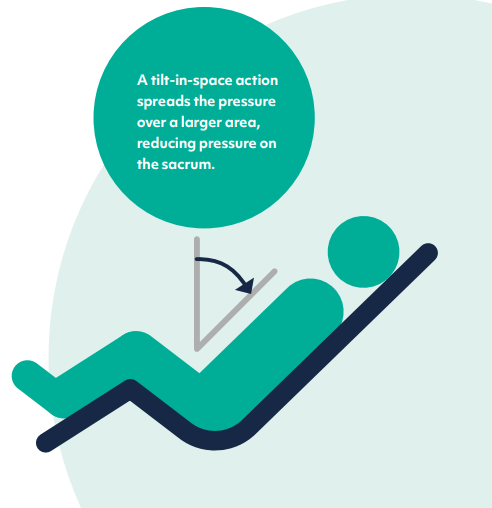
Pressure can be redistributed over a larger surface area of the body, by using tilt-in-space to change the angle of their sitting position relative to the ground.
Checking skin over bony prominences when transferring the patient helps spot any early signs of a pressure sore forming.
Although pressure is spread over a larger area when lying down, certain parts of the body like the heels and back of the head can be vulnerable to pressure sores, so repositioning is important when in bed as well. This can be assisted by using a profiling bed with pressure-relieving mattresses like coolgel or alternating air for higher risk users.

Posture and fit
Getting the correct seat size with the right depth, width and height dimensions is the first step to achieving good posture, which will in turn reduce sliding and shear.

How specialist seating can help
Specialist seating like care chairs and riser recliners can be very helpful in this area. Tilt-in-space, recline and rise functions, and pressure-relieving fabrics and cushions can all be used to reduce pressure risk and support positioning requirements.
Tilt-in-space
Tilt-in-space can be operated by the patient or carer using an electric handset or carer or tilt lever behind the chair, to vary the degree of tilt and redistribute skin pressure.

Recline
The angle of backrest recline and footrest elevation can be adjusted independently of the tilt with dual motor chairs, to further relieve pressure. This could be useful for plus-sized people who need to relieve pressure on swollen legs, for example.
An articulating legrest and back angle adjustments are useful features on our Lento Care Chair, for higher risk users.

Levitex foam
When we think about reducing pressure, often something soft and pillowy springs to mind, but in reality this doesn’t equate to the best pressure relief.
Levitex foam spreads pressure more effectively across contact surfaces, as well as providing increased firmness under compression which helps users move and reposition more easily in the chair.

Levitex Cradle Cushion
Conclusion
NICE recommends repositioning at least every 6 hours for adults at risk of pressure ulcers and at least every 4 hours for those at high risk, and international seating guidance suggests two hours of sitting between skin checks for people who can’t reposition themselves. Where someone sits around those figures depends on an individual assessment by an occupational therapist or other healthcare professional.
What matters most is regular movement, good posture, skin checks and seating that fits the person properly. Specialist seating with the right postural support, tilt-in-space and recline can make repositioning easier and keep people comfortable for longer, but it works best as part of a wider pressure care plan, not as a substitute for one.
Frequently Asked Questions


