How to Run a Sit-Out Audit on Your Ward


Deconditioning is a very prevalent topic in hospital healthcare at the moment, and an issue clinicians and ward managers are working hard to reverse.
As with any healthcare issue, without accurate data at their fingertips, hospital managers will struggle to make meaningful and lasting change.
This article looks at how to measure this using basic but effective technique, the sit-out audit, and how to interpret and act on the results so you can see deconditioning reduce on your ward.
Jump straight to…
What is Deconditioning and Why it Needs to be Measured
Deconditioning is the loss of physical function that comes with extended hospital bed stays, but can creep up quickly on patients and go unnoticed on a busy ward. This is why it is key to keep track of it, so that it can be actively prevented before it starts to take hold.
Since being written into NHS England’s Model Discharge Pathway, preventing deconditioning has become a clinical focus as hospital staff build early mobilisation into the recovery programme.
A key and often overlooked part of early mobilisation is sitting out in a chair, as it is the first step in the process and can be done even if the patient doesn’t have the strength to stand or walk.
See the Research and Evidence
Download our free whitepaper on deconditioning
A Study in Sitting: Brown and Colleagues 2009
C J Brown and her colleagues carried out a study in a US Veterans Hospital in 2009, to measure more objectively how much time patients spent sitting, walking or lying down.
To do this, they strapped accelerometers to the patients’ ankles for the first 7 days. The findings, which were published in the Journal of American Geriatrics Society, were astonishing. 83% of the measured time was spent lying in bed, with an average time of standing and walking just 43 minutes a day.
What was more worrying was that the baseline assessments showed that 77% of these patients were able to walk a short distance independently, which begged the question: why were they staying in bed?

Sitting Out: How to Measure It
As the old saying goes, “if you can’t measure it, you can’t manage it”. As well as clinical tools like the Clinical Frailty Scale and 4AT, there are other ways to measure the levels of patient mobility without having to strap accelerometers to people’s ankles!
As part of our extensive research into deconditioning and the associated causes, we have developed out own Sit-Out Audit Tool to use on your ward.
Before you feel overwhelmed with the thought of another form to fill in, please be assured: this tool is incredibly simple and easy. What’s more, it’s free to use on our website with no sign-up or email address required, and no data is stored anywhere.
Worried about Deconditioning on Your Ward?
Try out free audit tool
Filling out the tool is simple, just record the ward, date and time, and total number of patients on the ward divided up into how many are sitting out, standing and walking at that point in time.
This gives you a simple percentage score, which when measured for a week gives you a baseline recording which you can monitor to see whether the score is improving or worsening.

Running the Audit: Hints and Tips
The results of the audit will be more reliable the more consistently data is recorded. Here are some guidelines to help you gather more reliable data for your sit-out audit.
Do it the same time each day: Mid-morning or mid-afternoon work best, and it’s best to avoid mealtimes and ward rounds as these will skew the data. The main thing is to be consistent with the time you choose
Record the reasons why patients are still in bed: This is the most useful part of the data as it explains what is driving the results when you analyse it over time.
Screenshot the summary: Screenshot the data from our website after you have clicked calculate.
Do it for at least a week: This will give you a good baseline that can be the start of a business case or quality improvement project.
Reading the Results
The headline sit-out percentage is the key statistic here, but needs to be presented alongside the average time out of bed for context. For instance, 100% of patients sitting out but for only 15 minutes a day would still highlight an issue.
The reasons are important to see what kind of input the ward has on sitting out, whether this is due to medical reasons or just ward practice and routines.

Limitations of the Tool
Like any quick and easy clinical tool, the Sit-Out Audit has its limitations. It is clearly only indicative and tells you nothing about the other 23 hours of the day.
There is also the ‘Hawthorne effect’ of human studies, which is the psychological effect that behaviour tends to change when people know they are being monitored. In terms of sitting out, that is a useful side-effect of the study but should be taken into account when looking at the results.
In addition, the 83% figure from the JAGS Brown 2009 study is not directly comparable, as this is a percentage of total time rather than a snapshot that the sit-out audit provides.
What to do With the Results
If the numbers turn out to be concerning, it’s worth reading up on our guide to preventing deconditioning in hospital for some practical strategies to put in place.
If lack of suitable equipment is showing up as a main reason for staying in bed, our guide on ward chair specification should be helpful for you to review your equipment provision.

Taking it a Step Further
Doing the sit-out audit in isolation won’t fix deconditioning, but it makes the problem visible and provides numbers and data that can inform the action that needs taking.
We have invested time into Quality Improvement programmes with NHS Trusts, which takes the analysis to the next level and looks at how the introduction of seating programmes affect the sit-out data.
HiBack Bedside Chair
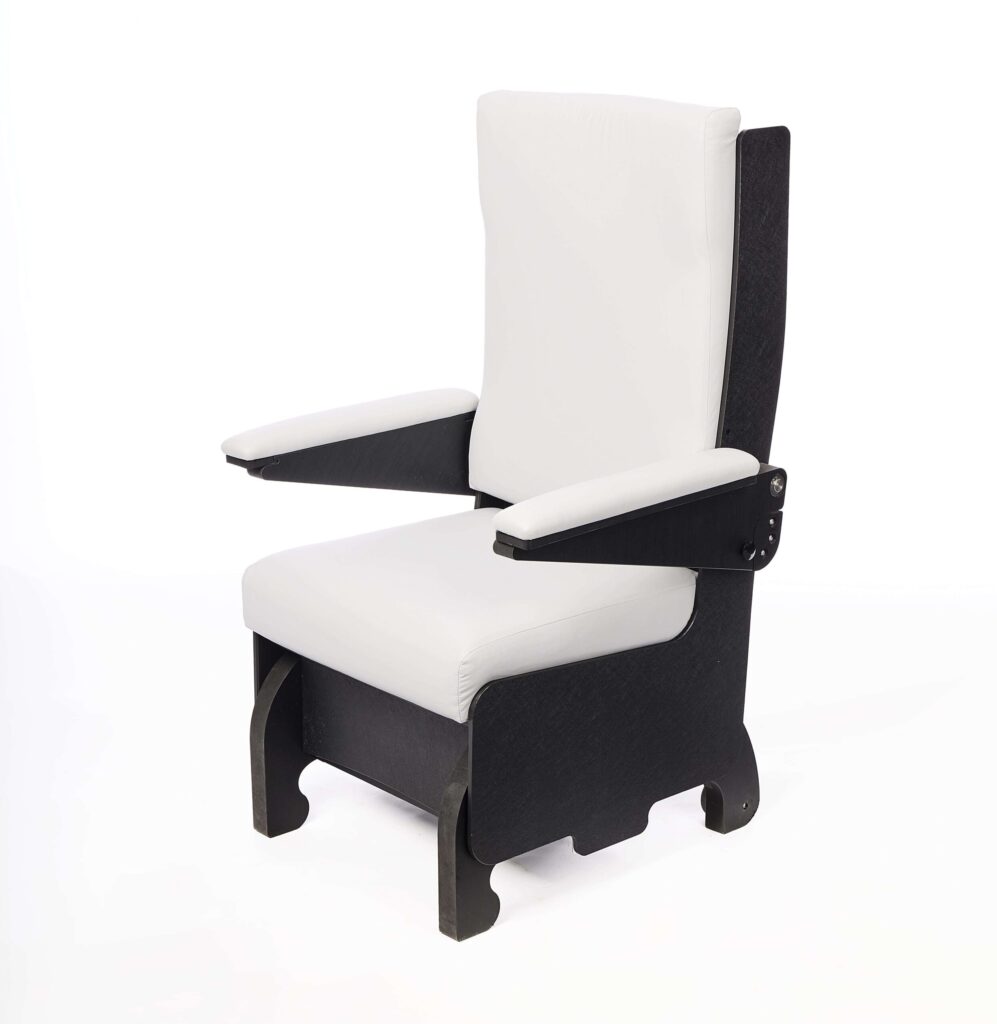
One of the massive strides forward in this area is the introduction of the HiBack Bedside Chair, transforming the sitting out experience and removing the urge to return to bed with enhanced levels of comfort.

Developed from extensive research with moving & handling staff, it resolved the common issues experienced by patients and ward staff:
For patients:
- Discomfort and pain – hard and uncomfortable ward chairs were discouraging patients from sitting out, but the HiBack’s ergonomic design and Levitex foam brings unprecedented levels of bedside comfort
- Risk of falls – lack of adjustability and difficulty getting up from the chair meant frail patients were at risk of falling, discouraging getting out of bed even more. The flip-back armrests and height adjustment on the HiBack make transferring into the chair so much easier and safer. Levitex foam and padded armrests help this further, providing a stable and supportive base to stand up from.
- Pressure risk – poor quality foam and hard vinyl fabric was putting patients at risk of pressure sores. Now with four-way stretch dartex and Levitex foam on the HiBack, pressure care is vastly improved.
- Lack of adjustability – one-size-fits-all chairs were causing major discomfort, with clunky adjustment mechanisms. The HiBack is seat width, height and depth adjustable with adjustable lumbar section and backrest recline.
For staff:
- Difficult adjustment mechanisms – having to upend the chair and grapple with difficult adjustment mechanisms was making life difficult for staff, but now with the HiBack a simple turn handle at the back of the chair is all that’s required.
- Limited durability – damage to wood frames meant that bedside chairs weren’t standing up to heavy ward use. Now with a tough propolymer frame, the HiBack is incredibly durable.
- Infection control – rips and tears in the vinyl fabric were causing infection control issues, causing ingress of bacteria. The four-way stretch fabric is much more durable and the propolymer frame is antibacterial throughout and much more resistant to knocks and scrapes on a busy hospital ward.
Need to Upgrade Your Bedside Seating?
Book a HiBack demo
Conclusion
The sit-out audit is an incredibly useful tool and helps identify the barriers to sitting out that are so important to remove if hospital-based deconditioning is going to be prevented.
If you’re interested in exploring this research area further, have a read of our Sitting Out Whitepaper which covers the evidence for seating intervention in more depth. Or you can sign up to this month’s webinar, where we will be exploring this subject in depth with clinical experts in this field.
Recommended Products

HiBack Bedside Chair
Say goodbye to compromise, and hello to a generation of bedside chairs with game-changing levels of easy adjustability, patient care, and comfort.
Enquire About This Chair
Bariatric High Back Bedside Patient Chair
Bariatric high back patient chair designed to offer comfort and postural support to elderly and low mobility patients.
Enquire About This ChairFrequently Asked Questions