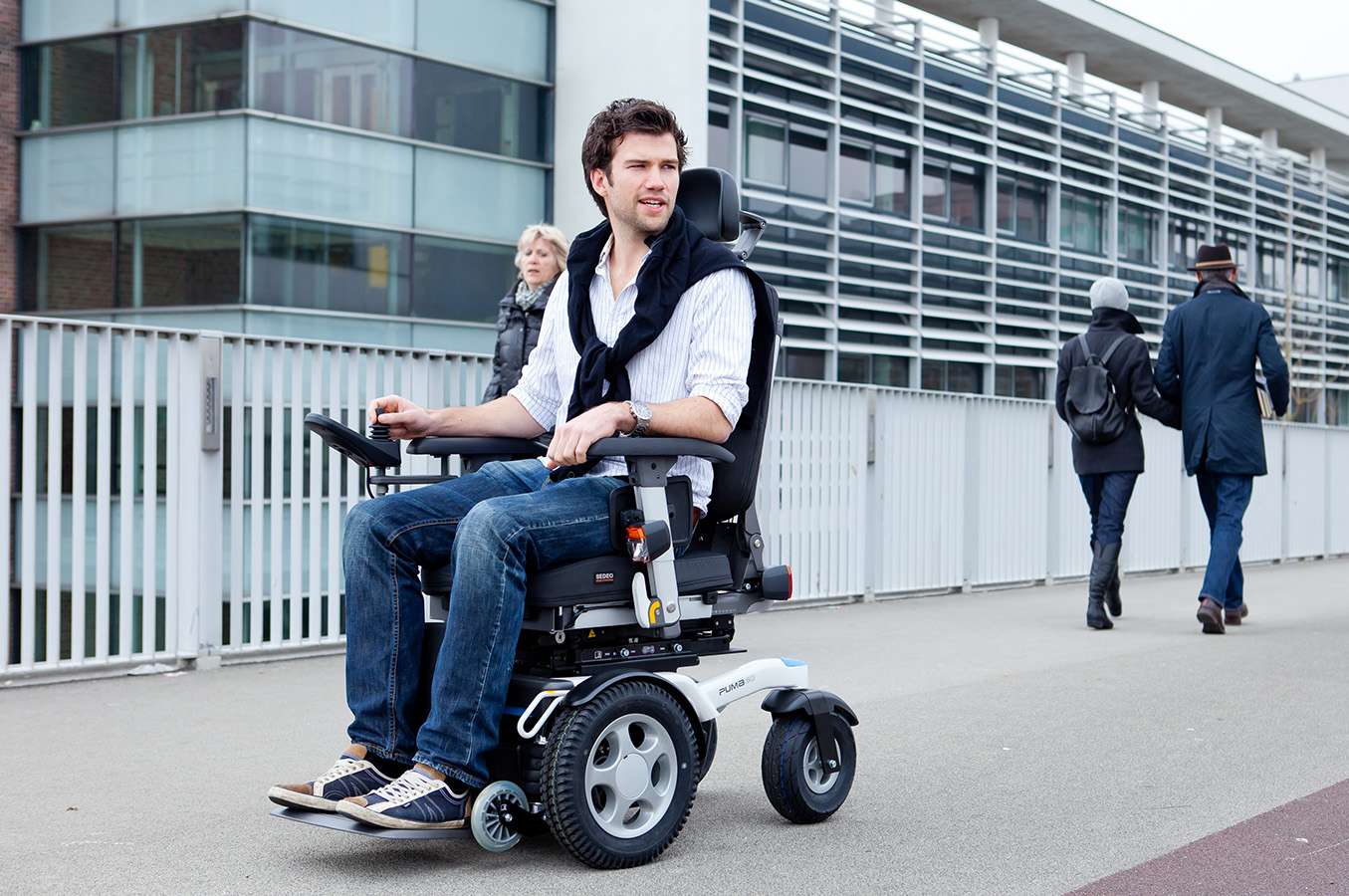
What is the Best Children’s Wheelchair?


Choosing a children’s wheelchair can be difficult, as there are several aspects to this decision. As well as supporting their posture, you need something that can be adapted as they grow, and help them get around at home, school or with friends.
The right wheelchair for your child depends on how much they get around, how much support they need and how active they are. This guide explains what a children’s wheelchair is, how NHS provision works, and what features to look for, covering both manual and electric options.
Jump straight to…
What is a children’s wheelchair?
A children’s wheelchair or paediatric wheelchair is smaller and lighter than an adult’s chair, and built to adjust as a child grows. Many have features to help younger users be as independent as possible.
Children’s wheelchairs can generally be categorised into a few different types:
- Lightweight manual wheelchairs are either self-propelled by children, or transit (pushed by carer)
- Tilt-in-space wheelchairs, where the whole seat tilts back for children who need extra postural support or pressure relief.
- Electric wheelchairs, usually for children who are unable to self-propel due to physical limitations, but can safely control a powered chair.
A good children’s wheelchair should do more than just move them from A to B. It should support comfortable posture, prevent discomfort and give them freedom to play and learn with their friends.

Does the NHS provide wheelchairs for children?
The NHS provides wheelchairs for children through the local NHS wheelchair service. You can a get a referral to this service via your GP, paediatrician, physiotherapist or OT. Waiting times will vary, but usually your child will receive an assessment by a wheelchair therapist, and every NHS wheelchair service will have specific criteria to measure against, including a certain number of hours a week the wheelchair is needed for, and whether it’s for indoor or outdoor use. Most services will only provide wheelchairs for permanent disabilities, rather than just a short-term need.
Since December 2019, people who meet their local wheelchair service criteria have a right to a PWB (Personal Wheelchair Budget). This allows you to purchase the chair of your choice from a local retailer up to a certain value, or pay the extra amount yourself if the wheelchair you want exceeds the PWB. This provides a lot more flexibility and freedom of choice than just a standard issue NHS wheelchair. The other advantage of private purchase is that no VAT is charged if you have a long-term illness or disability.
What size wheelchair does my child need?
Get the right sized wheelchair is as important for posture as it is for comfort. These are the three size metrics to measure for, covered in more detail in our guide to wheelchair sizing.
Seat width – measure the user at the widest point (usually hip to hip), with a small gap each side.
Seat depth – measure from the coccyx to the back of the knees, so the seat supports the thighs without pressing behind the knees.
Seat height – measure lower leg length so the feet rest comfortably on the footplate
Backrest height – this depends on the user’s needs, as an active wheelchair user will need a lower back to allow their shoulders to move freely
Adjustable seat dimensions are important to allow the wheelchair to grow with the child.

At what age can a child use a wheelchair?
There is not really any minimum age for a child to use a wheelchair, as children under two can be put in specialised strollers or buggies. The ability to propel a manual wheelchair would usually start around aged five.
If you’re unsure what wheelchair is appropriate for the age of your child, a paediatric physio or children’s OT should be able to advise.
Need a Children's Wheelchair?
Browse our wheelchair range
How to choose the right children’s wheelchair
How does your child move?
A child with good arm strength may find a lightweight rigid chair useful to make propelling easier, whereas a child that is reliant on a carer to push them may need more postural support features.
For older children who can’t self-propel easily, an electric wheelchair may be a better option.
How much postural support do they need?
If you child is unable to reposition themselves independently, greater levels of postural support will be required. You may want to look at tilt-in-space options with supportive postural cushions and adjustable backrest angles.
Will the chair grow with them?
Look for adjustable seat width and depth so your child can use the same chair for longer.
Where will the chair be used?
A folding wheelchair is easier to store and transport when going to school or on days out. If the chair will be used in a vehicle, check that it’s crash tested and has secure attachment points.
How heavy is it?
Lighter wheelchairs are easier to push and lift in and out of the boot, and for self-propelling.
Will your child like it?
Using your child’s favourite colours and personalising the chair to their personality can make your child more attached to their wheelchair.
All these different aspects can be brought together in a specialist wheelchair assessment, where you can see the chairs in person and try them out.

Manual vs Electric Children’s Wheelchairs
Electric wheelchairs can be life-changing for some children and open up a whole new vista, especially as they get older and want to go further under their own steam.
Manual wheelchairs
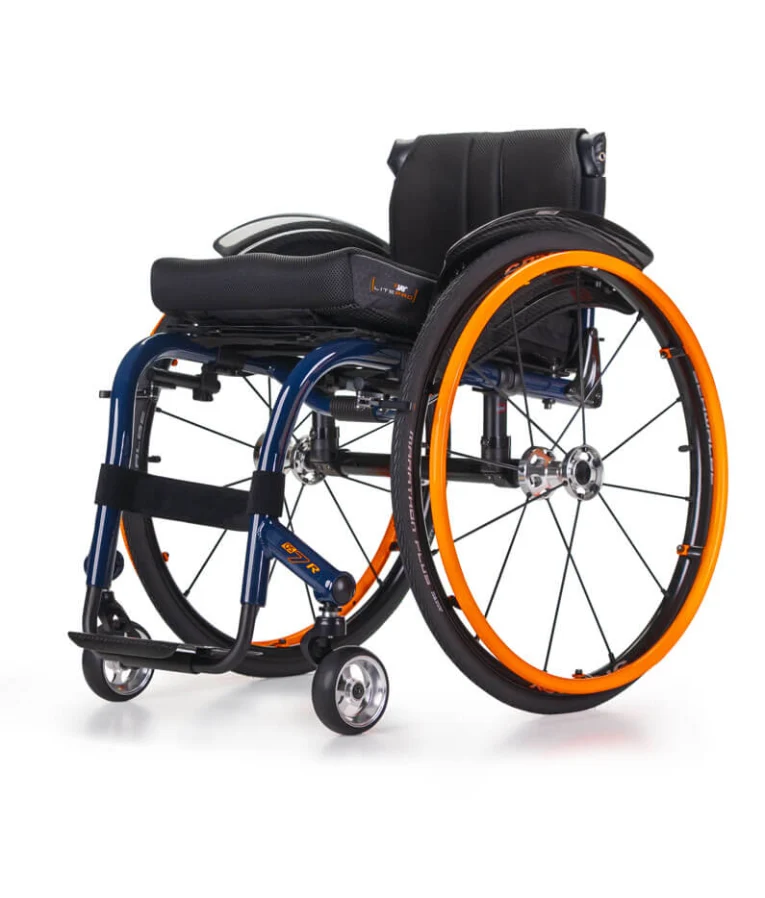
The main advantages of manual wheelchairs are that they are lighter and easy to push, and often fold to fit easily into a car boot. Active user chairs are self-propelled but easy to propel by being lighter and better optimised for weight distribution.
Electric wheelchairs
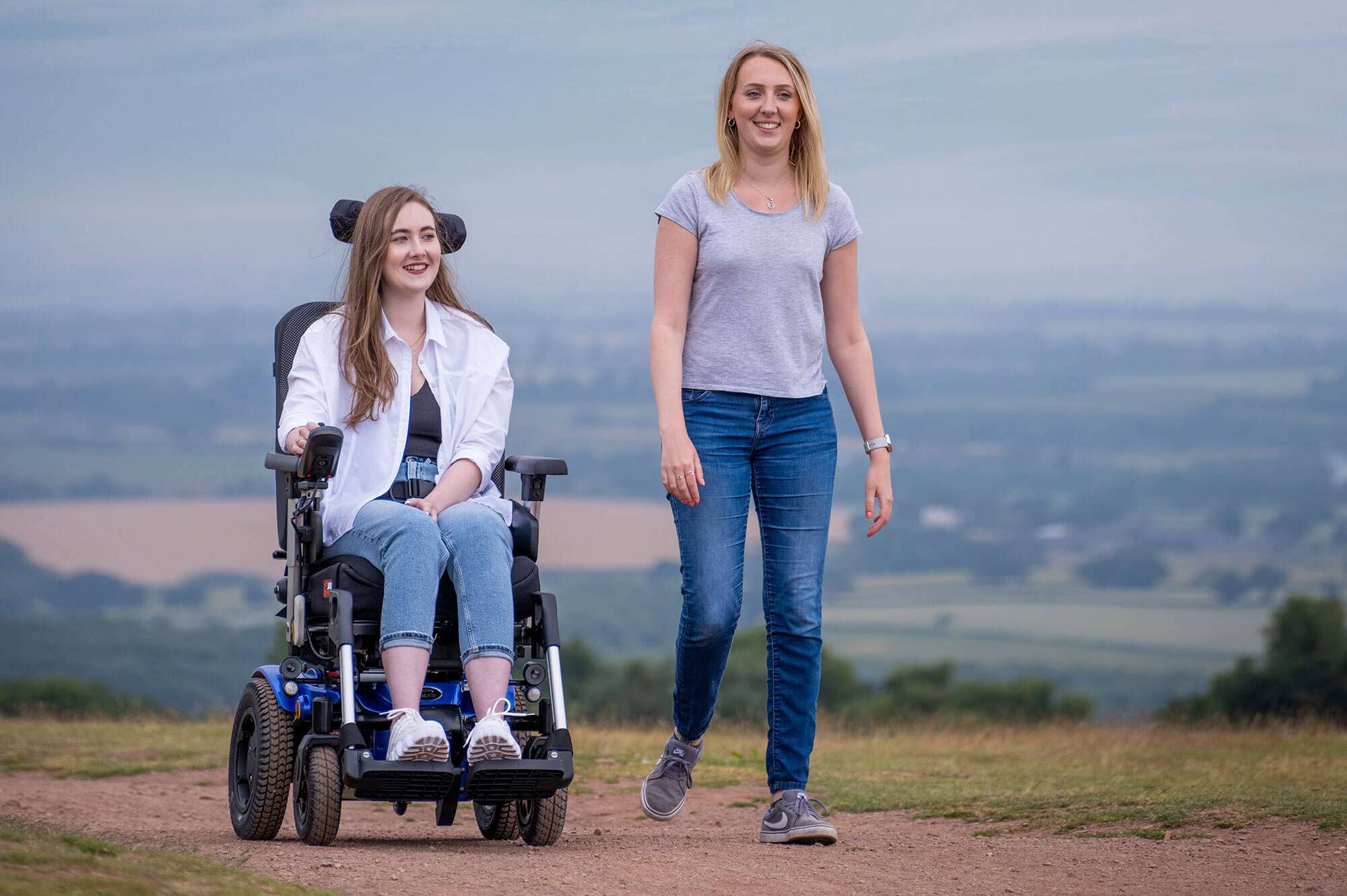
These are worth considering for children who tire easily or struggle to propel over longer distances. Being able to operate the wheelchair with a joystick and travel over longer distances and even rough terrain can give children and teenagers a lot more independence. NHS Wheelchair Services would usually test the child’s ability to control the chair safely, before issuing one.
These two electric wheelchairs in our range are popular with older children and teenagers:
- Compact chair at just 550mm wide, so great for indoor use
- 14-inch drive wheels for good traction outdoors
- Climbs kerbs up to 100mm
- Seating and footplates grow with the user
- 32km range
- Range of bright colours to choose from
- One of the narrowest mid-wheel drive powerchairs on the market – just 52cm wide
- Great for navigating tight spaces
- Up to 36km range so great for outdoor use
- Crash-tested
- Wide choice of colours
- Larger seat sizes make it more suitable for teens

Need a Wheelchair Assessment for Your Child?
Book a free wheelchair assessment
What is the best children’s wheelchair?
If you’re looking for a manual wheelchair, there’s a great range of options out there – here are some from our range.
Zippie Youngster 3 (Active User Chair)
Best for more active kids who need a folding chair

The Zippie Youngster 3 is the lightest folding wheelchair for children, that adjusts with them as they grow.
The patented cross brace expands by 2cm for a wider seat, and the seat depth can be increased by 4cm.
The safari brake is a handy feature that allows the user to brake quickly without reaching forward, and it folds and transports easily.
Zippie Simba (Active User Chair)
Best for children learning to self-propel

The Zippie Simba is a rigid active user chair that only weighs 8kg, so easier for small children to push themselves around on. Rigid frames are more energy efficient, so more of the propelling energy is converted into forward movement.
The seat adjustment is the same as the Youngster 3, 4cm of seat depth and 2cm of seat width.
The rear seat height, centre of gravity and seat camber are all adjustable, and the push bar can be height and angle adjusted. The abducted frame keeps the child stable, with a choice of colours and styles they can customise.
Little Wave Flip (tilt in space wheelchair)
Best for children needing postural support

The Little Wave Flip looks and operates like a stroller, but has all the important features of a wheelchair, including tilt-in-space up to a 45 degree tilt.
It also folds up flat for storage and transport, weighing just 9.5kg, and is crash tested for use in a vehicle. The seat height, width and depth all adjust to accommodate the child’s growth, up to a 75kg weight limit.
Next Steps
If you’re looking for a children’s wheelchair, why not get in touch with our mobility specialists who can help you compare options?
Book a free no-obligation assessment and configure the chair around your child’s needs.
Recommended Products
ZIPPIE Simba
The Zippie Simba is a rigid lightweight wheelchair for children weighing only 8kg, making it easier for them to self-propel.
Enquire About This WheelchairZippie Youngster 3
The Zippie Youngster folding wheelchair is ultra lightweight with adjustable seat depth and width.
Enquire About This WheelchairLittle Wave FLIP
A paediatric tilt-in-space wheelchair designed in the appearance of a stroller, but with all the important features of a wheelchair.
Enquire About This WheelchairFrequently Asked Questions