What is a Bariatric Bed & How Do You Get One?


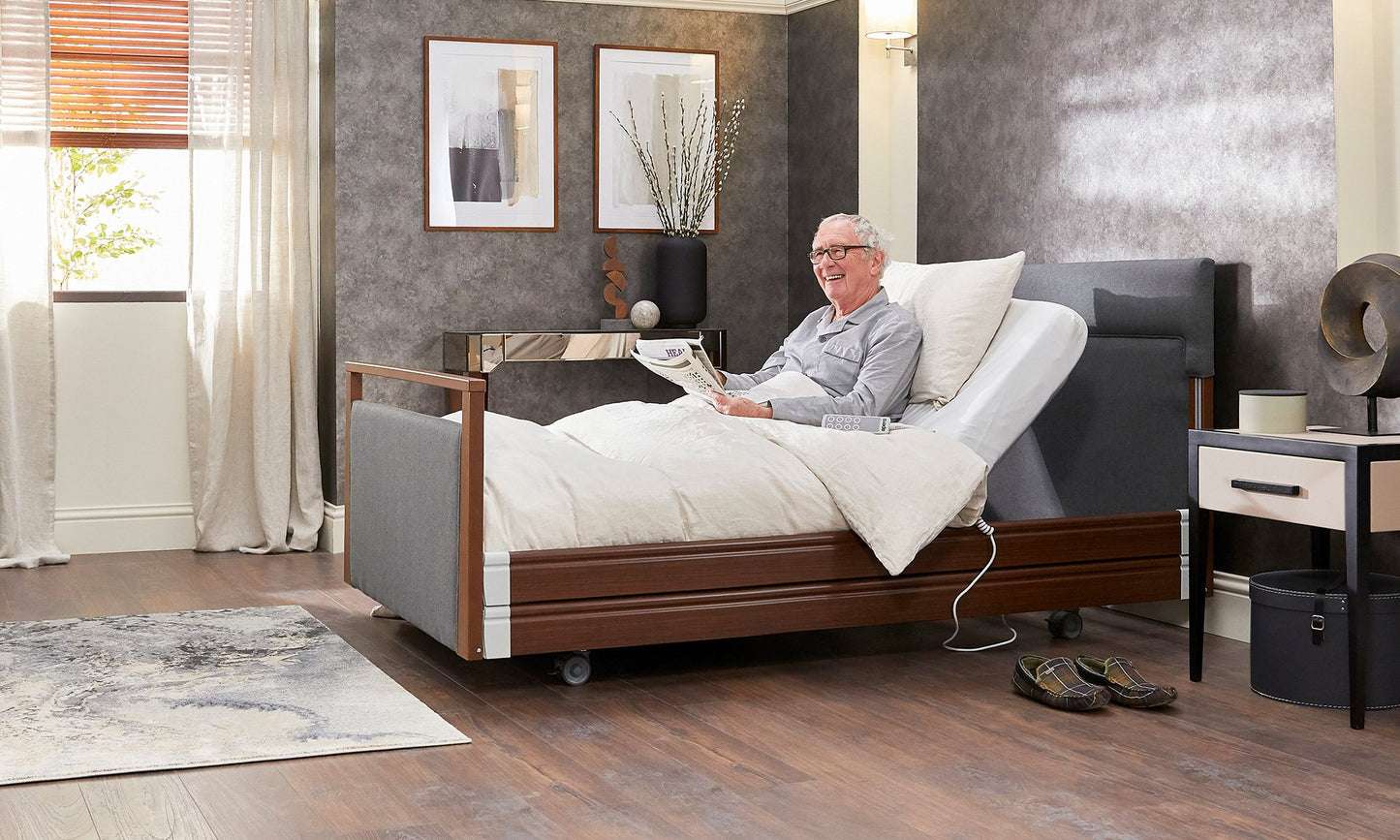
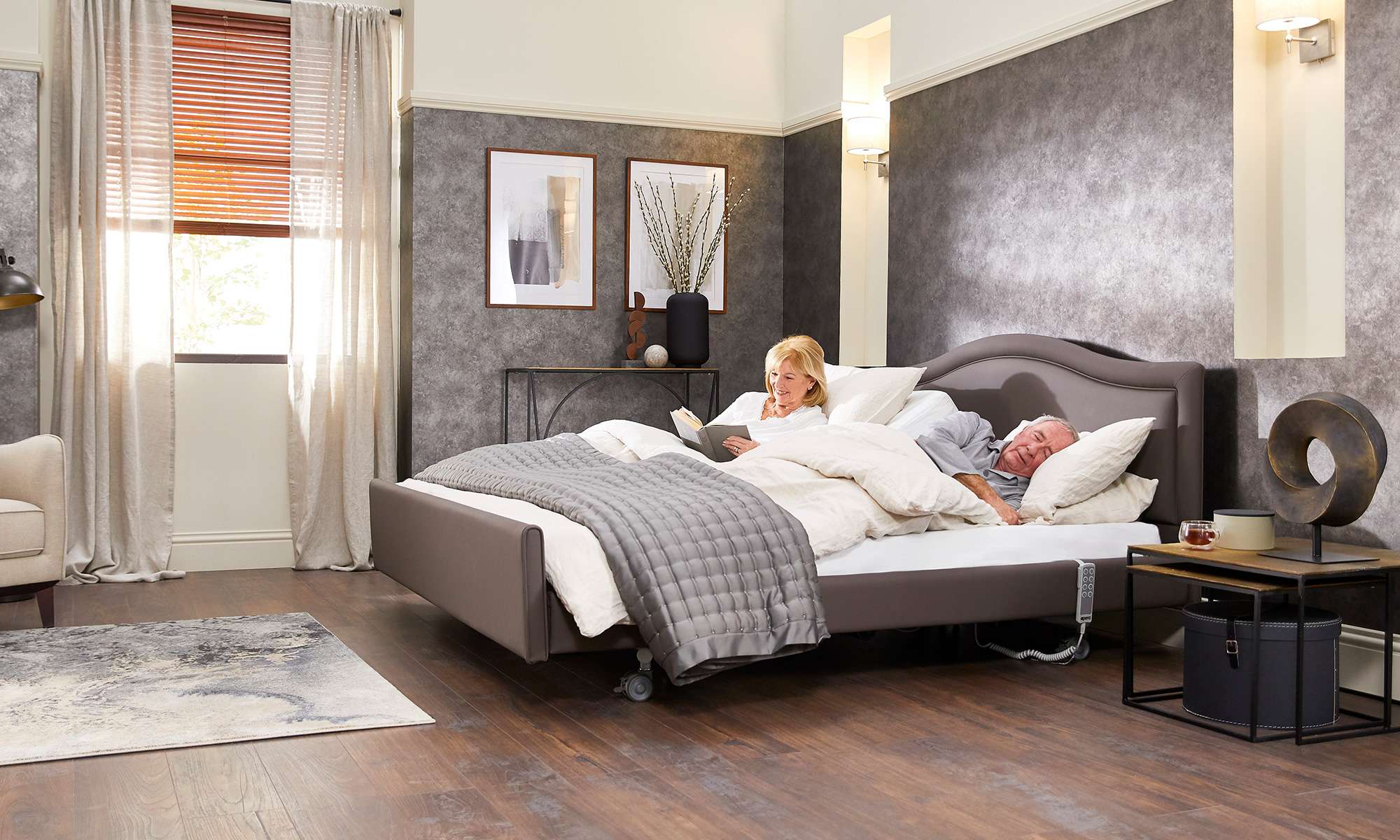
Caring for plus-sized patients at home or in residential care may not be safe enough with a standard care bed, which is why bariatric beds are needed. The higher weight limits, extra width and reinforced frame of these beds are built around the needs of larger patients.
This blog looks in detail at the features of bariatric beds, where they are used and crucially how to get one depending on your specific needs and circumstances.
Jump straight to…
What is a Bariatric Bed
Bariatric beds are designed and constructed specifically for the clinical needs of plus-sized users.
‘Bariatric’ is a term used in healthcare for the treatment of overweight or obese patients, typically someone with a BMI of 40 or above.
Bariatric beds are generally wider and longer than standard beds, with reinforced frames to accommodate the higher weight limits and additional needs of bariatric patients, whether in residential care or hospital.
Weight limits for bariatric beds are typically anywhere between 200 and 500kg. The mattress, hoist and other equipment used with the bed should all be compatible with the person’s weight and dimensions.
It’s also important to understand the difference between the maximum user weight and safe working load (SWL). The SWL is usually higher than the max. user weight, as it combines the patient weight, bariatric mattress and any other equipment used on the bed.
Download Our Bariatric Seating Ebook
The Healthcare Professional’s Complete Guide to Bariatric Seating
What’s the Difference Between a Bariatric Bed and a Regular Hospital Bed?
Bariatric beds look similar to a standard hospital bed on the surface, but differ in terms of the engineering.
Stronger Construction
Key features of bariatric beds are built from stronger materials such as side rails, head and footboard and heavy-duty castors.
Extra Positioning Options
Extra positioning options are included like auto-regression, where the backrest and knee brake incline to create a sitting position to help with weight distribution.
Split Side Rails
Split side rails will normally be a safety feature to allow the bed to profile into the different positions with the side rails still in place.
Wider Base
A standard hospital bed is usually around 90-100cm wide, but bariatric beds are around 100cm-120cm, giving more room for comfort, repositioning and safer manual handling.
What Qualifies a Patient for a Bariatric Bed on the NHS?
There’s no single checklist that qualifies someone for a bariatric bed.
Provision is generally based on an individual assessment of the person’s care needs, carried out by an OT or community care team. This could include circumstances such as a high falls risk, pressure sore risk, or a hospital discharge patient who needs suitable equipment in place before they get back home. People needing end-of-life care would be prioritised if a bariatric bed was urgently needed to support care at home.
Buying a bariatric bed privately is a quicker route so you’re not dependent on local authority budgets or timescales, and gives you more control over the bed specification and aesthetics.
Our guide to how to get a hospital bed at home covers this area in more detail.

Browse Our Range of Hospital Beds for Home
Browse our bed range
How to Choose a Bariatric Bed
There are several suppliers of bariatric care beds in the UK, but here are some from our range.
The Signature Bariatric Profiling Bed has a 120cm-wide sleeping platform and maximum user weight of 265kg, with a higher safe working load specified for the complete system.

The Versatech 1100 Ultra Low Bariatric Hospital Bed is built for an even higher safe working load of 500kg, aimed at users with greater support needs.
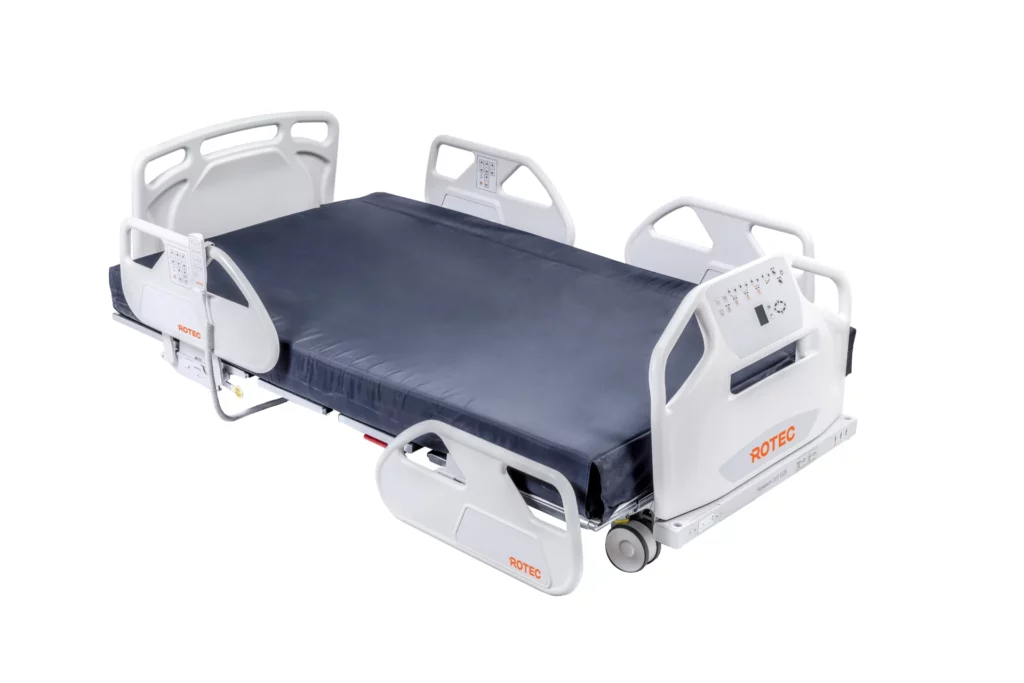
Bariatric beds shouldn’t just be chosen on weight limit alone. Width, transfer space, room dimensions, mattress compatibility and moving-and-handling requirements are all other factors that should also be taken into account.
- Room dimensions – a longer and wider bed will need more floor space and enough surrounding space, so make sure you check the room dimensions and also access room including doorways
- Transfer space – carers will need enough room to safely transfer the patient safely, whether that’s with a hoist, slide sheet or standing aid.
- Mattress compatibility – the mattress needs to be rated for the patient’s weight, and compatible with profiling beds so it can work with the different positioning functions.
- Moving and handling equipment – check that hoist, slings and transfers aids are compatible with the bed’s dimensions and weight rating.
Conclusion
A bariatric bed is a significant investment, and getting the specification right is important. If you’re getting one through the NHS or your local authority, an OT or community equipment service will assess your needs, though waiting times can be longer depending on demand and urgency.
If you want a bariatric bed quicker or more choice over the model and features, buying privately might be your preferred option.
Whichever option you choose, your decision should be based on the weight capacity, width, room layout, mattress and moving and handling needs of the patient.
Recommended Products
Signature Bariatric Profiling Bed
The Signature bariatric profiling bed has been specifically designed with a heavy-duty frame and a wider sleeping platform to accommodate heavier users up to 40 stone in weight.
Enquire About This Bed
Lento Bariatric Care Chair
Building on the trusted design of our modular Lento Care Chair, the new Lento Bariatric Care Chair has been engineered to offer the same levels of comfort, with head-to-toe postural support, easy adjustment without tools, and in-built pressure care.
Enquire About This Bed
Lento 50 Stone Riser Recliner Chair
The Lento Bariatric Riser Recliner supports users up to 50 stone with motorised comfort and safety.
Enquire About This BedFrequently Asked Questions