This article goes over the options you have when looking to get a hospital bed at home. There are a range of reasons people may require a hospital style medical bed to provide care in their home including:
- Upgrading a current bed.
- Those recently discharged from hospital.
- Community care
- Respite care
- Hospice care
- Moving in/out of care homes.
Jump straight to…
What is a ‘Hospital Bed’?
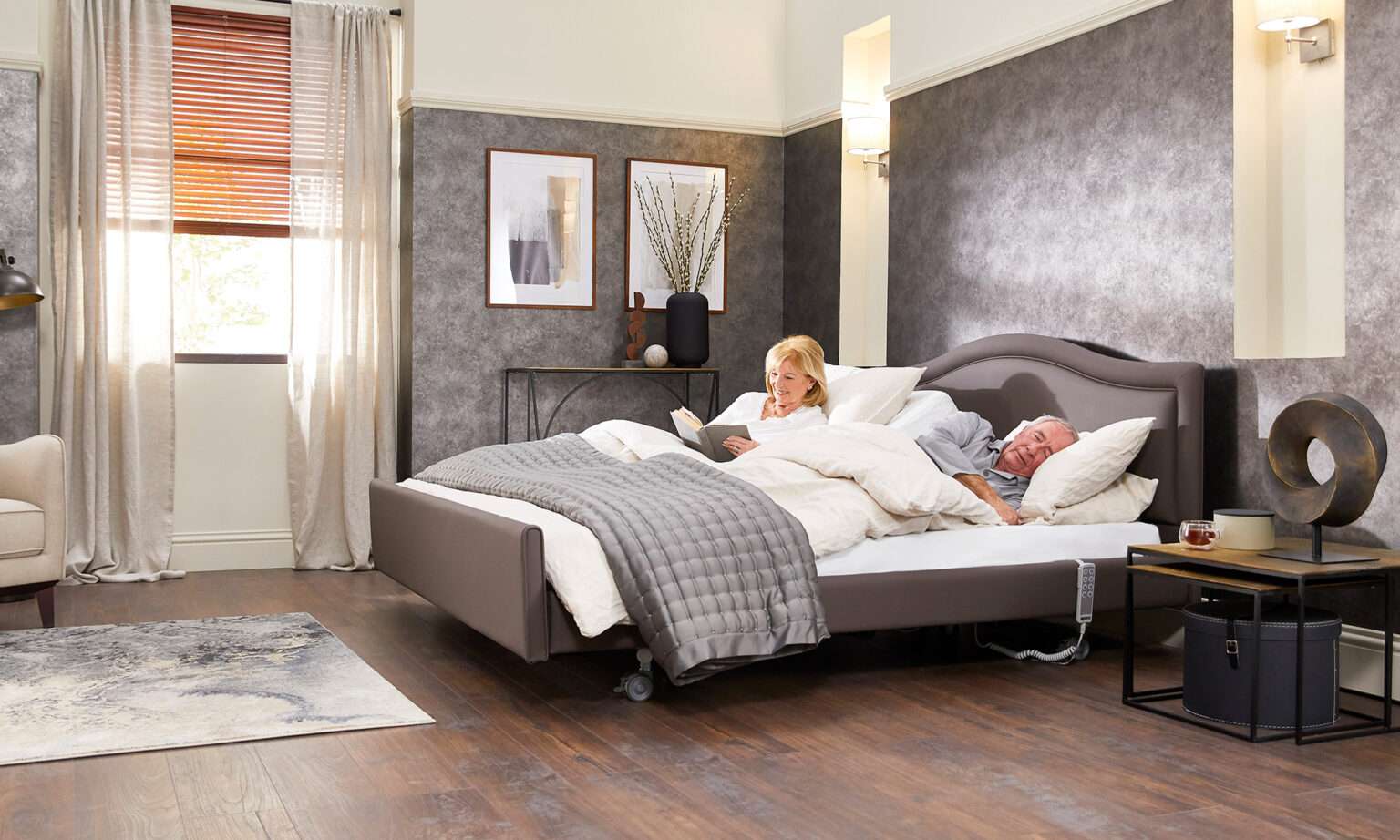
Hospital beds contain many features you wouldn’t usually expect to find on a bed in someone’s home.
Modern hospital beds are very adaptable to patient needs; designed for safety and to facilitate medical treatment by the NHS and healthcare professionals.
Electric, adjustable beds can have a range of features to benefit users:
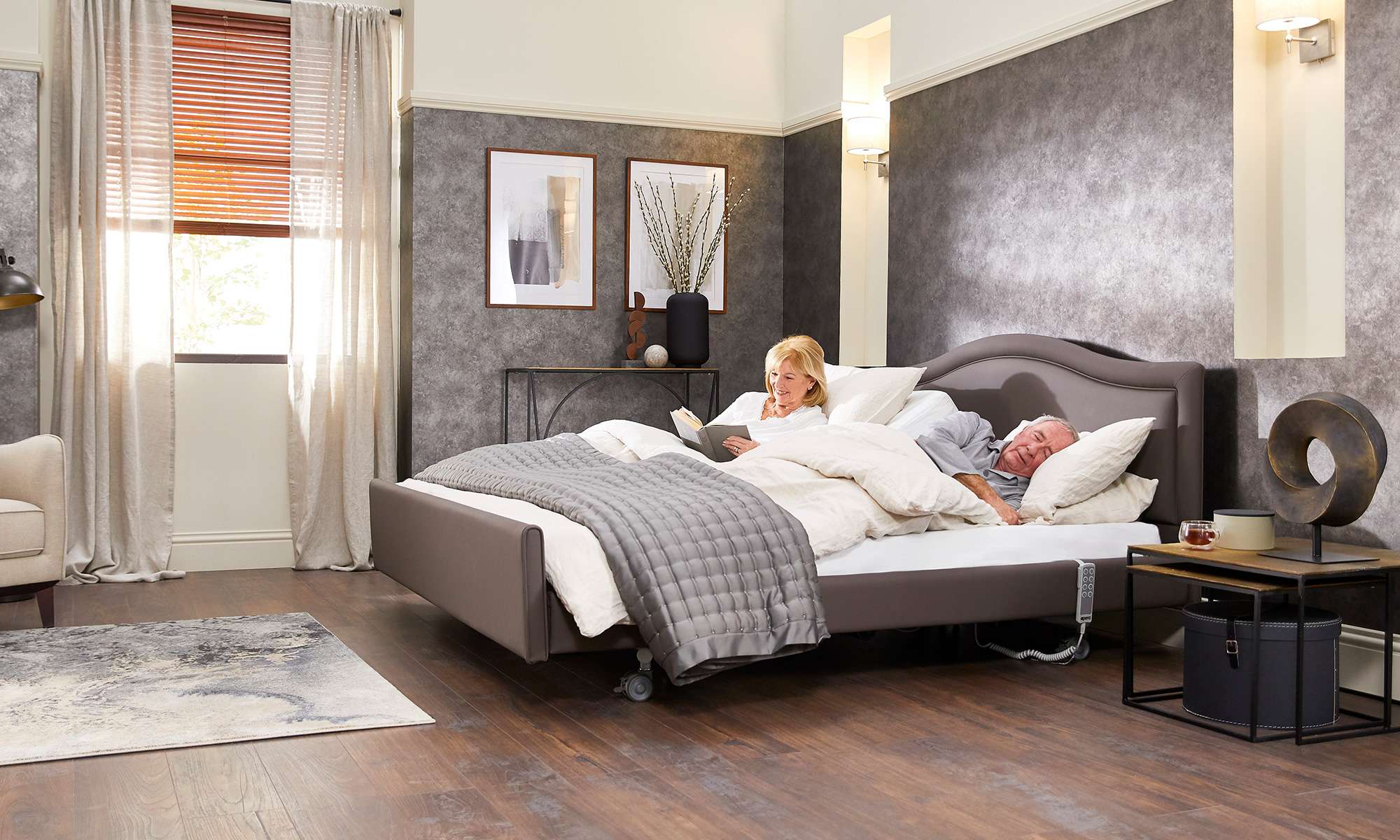
- Provide supportive head or foot elevation with their electric profiling base.
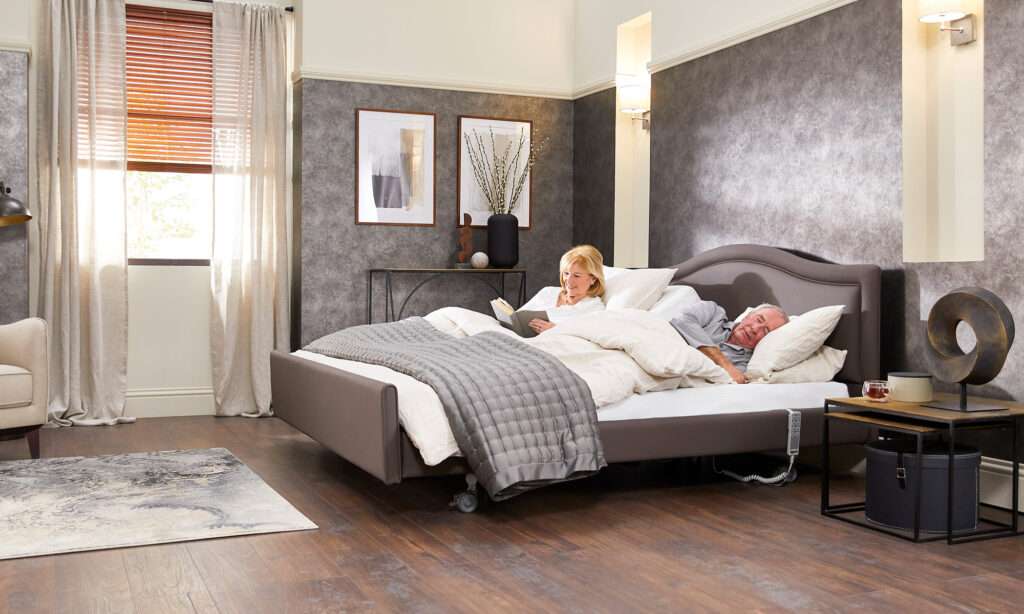
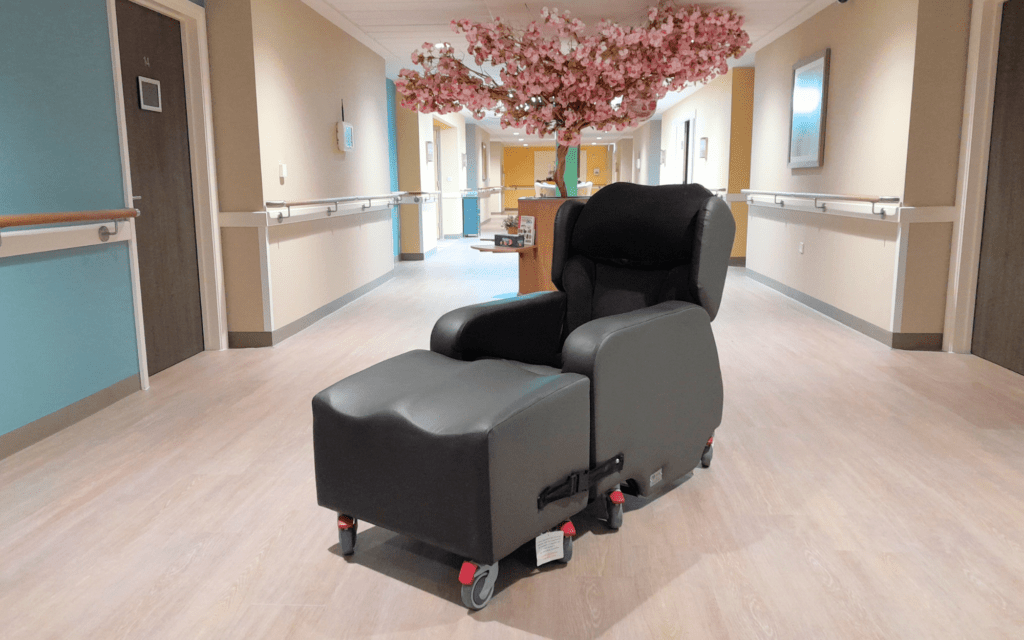
- The ability to rotate and turn into a chair bed to provide moving and handling assistance for elderly, disabled, bariatric or otherwise low mobility users
People with long-term health conditions, recently discharged hospital patients, palliative care patients at home rather than in a hospice and individuals with low mobility can all require assistive equipment that provides more support and functionality than a standard bed.
Know what you're looking for?
How To Get A Hospital-Style Bed At Home
However, hospital beds come in all kinds of sizes, makes, and models. There’s no one set standard – different types of bed exist to suit different patient needs.
So, if you think you or a relative would benefit from having a hospital bed at home, we recommend speaking to a professional. They can make sure you get a bed that meets your care requirements.
There are two main ways to access professional advice on hospital beds for home:
Getting a Free Hospital Bed from the NHS or Social Care Services
In the UK, you can get a free hospital bed on loan from the NHS or Local Authority social services if you meet the eligibility criteria. Meeting this criteria requires an assessment or a decision from your GP and could take some time.
Eligibility Criteria
A healthcare professional such as a GP, district nurse, or OT must confirm a hospital bed is medically necessary, usually based on the following reasons:
- You need to change position regularly to prevent pressure sores or improve circulation
- You have a medical condition that requires your head or feet to be elevated
- You can’t get in and out of an ordinary bed safely
- You’ve recently been discharged from hospital and need extra assistance at home.
The table below outlines some of the NHS care & hygiene tasks that might require a using a hospital bed at home.
An assessment can be done by an occupational therapist in your home, or your GP can make a decision on medical grounds.
A potential downside to this is that you may have to wait a while to receive your profiling bed.
Going through the application processes can take a long time; you also won’t get much of an input on the bed’s appearance. Hospital beds supplied through social care services are often bulkier and more clinical looking than hospital beds you can buy for yourself.
This is why some people choose to buy or hire a hospital style bed from a retailer, to speed up delivery and their hospital discharge, and choose from a greater range of styles and colours.
Other Ways to Get a Hospital Bed
Hospices and Palliative Care Services
If you or a loved one is receiving end of life care, the hospice should be able to arrange for a hospital bed to be delivered to your home.
Buying a Hospital Bed from a Mobility Retailer
For many people, buying a hospital bed direct from a mobility equipment supplier is the best and fastest way to support at-home patient care.
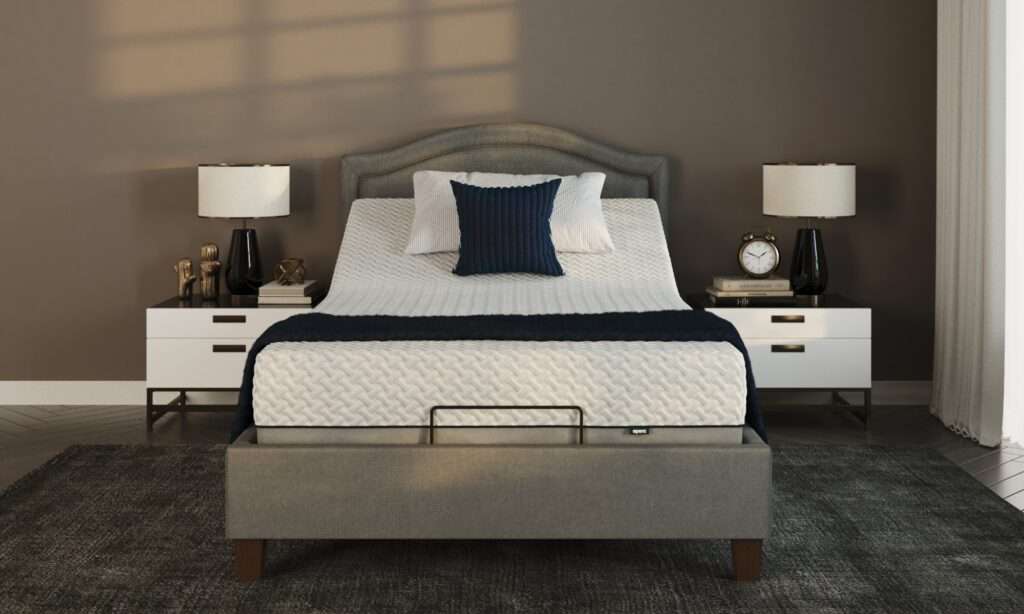
By ordering a bed for yourself, you also have more control over the kind of bed that you get. You can opt for single divan style adjustable bed bed, or double profiling beds for couples.
We recommend going directly to a mobility equipment supplier if you:
- Want fast hospital bed delivery
- Want to choose the design and look
- Don’t have an occupational therapist
- Don’t meet the requirements to get a bed through the NHS
Is There Other Financial Help Available?
Charitable Funding
It is possible that an external charity may offer financing help to buy a mobility bed, so it is worth checking with local charities in your area.
Find Charitable Funding
VAT Relief
There is VAT relief options for people with one or more ongoing disabilities, this UK government VAT relief page explains the criteria for zero VAT eligibility on products intended for the care or management of a person’s disability.
In summary, you can get VAT relief on certain mobility products such as beds if you are chronically sick and disabled, and the goods are for your personal use. The VAT is deducted at source when you purchase the bed from the retailer, so you pay for the cost of the goods nett of VAT.
Get Expert Advice Today
What About a Profiling Mattress?
When you buy a hospital bed from a mobility equipment supplier, you can also choose the type of profiling mattress that will come with your bed, for comfort a standard profiling bed mattress is the choice to make.
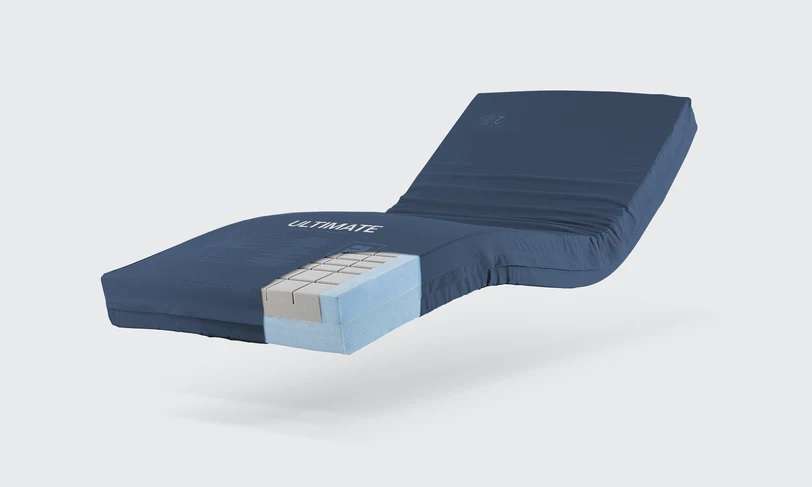
For people who expect to regularly spend a bit longer in bed, a foam pressure relief mattress is the recommended choice.
These types of profiling mattresses have pressure distributing materials inside them that reduce the chance of developing pressure sores/ulcers.
Can You Use a Normal Mattress on a Hospital Bed?
You can’t use a standard pocket sprung mattress on a profiling bed. They are just not flexible enough to support the profiling movement of the bed panels.
Non-innerspring mattresses (memory foam, latex and some hybrid mattresses) can imperfectly be used but it is best to buy a profiling mattress specifically made to go along with a profiling bed.
You can learn more about how profiling mattresses use airflow to reduce the development of pressure sores/ulcers.
Shop for Hospital Style Beds Online
Frequently Asked Questions
What size are NHS hospital beds for home?
Most NHS hospital beds for home use are standard single size (approx. 90cm x 200cm). Wider or bariatric beds may be provided if clinically required. Buying privately gives you more size options.
Why would you need a hospital bed at home?
A hospital bed at home may be needed if you have reduced mobility, are recovering after hospital discharge, require pressure sore prevention, or need head/leg elevation for medical conditions. Profiling beds improve safety, comfort, and ease of care.
How quickly can you get a hospital bed from the NHS?
Urgent cases (such as hospital discharge or end-of-life care) may be arranged within days. Non-urgent NHS assessments can take several weeks. Buying or hiring privately is often the fastest option.
Who is eligible for a hospital bed at home?
You may qualify for a free NHS hospital bed if a GP, nurse, or occupational therapist confirms it is medically necessary due to mobility issues, pressure risk, or complex care needs. Eligibility is based on clinical assessment.
What conditions qualify for continuing healthcare?
NHS Continuing Healthcare (CHC) supports people with ongoing, complex health needs. Conditions such as advanced dementia, neurological disease, stroke after-effects, or terminal illness may qualify — depending on overall care needs, not just diagnosis.

Brian is a university graduate with a particular interest in researching and writing about healthcare topics, including medical conditions, and current NHS issues and solutions. To ensure his articles are relevant and accurate, Brian uses UK government and private sector reports, and draws on a vast network of independent occupational therapists, physiotherapists, and healthcare professionals to both inform and verify his work.