What is a Therapy Chair?


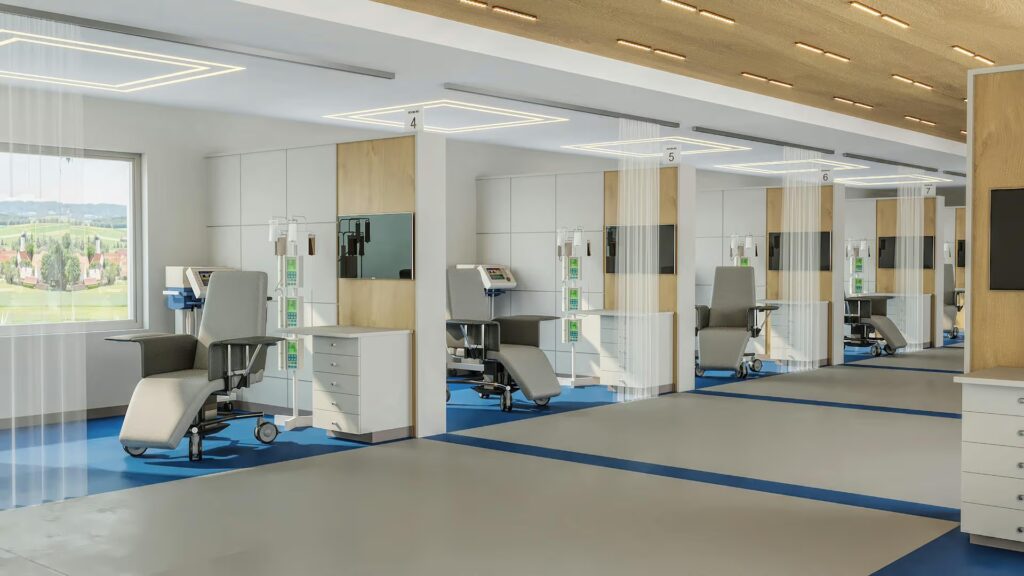
Anyone’s who spent time in hospital whether as patient, visitor or working as a clinician will probably have come across a therapy chair even without knowing what it’s called. At the heart of many treatment pathways, they support patients through chemotherapy to physiotherapy programmes.
In this article we explain more about what therapy chairs are, the benefits, and how to choose the right one for a hospital ward or healthcare clinic.
Jump straight to…
What is a Therapy Chair?
A therapy chair is used to support someone receiving medical therapy or treatment of some kind, usually in a hospital setting.
This can cover a range of wards and treatments, including dialysis, chemotherapy, infusion therapy, haemotology and phlebotomy, commonly found along the acute care pathway.
It could also include rehabilitation therapy such as physiotherapy and strength-based exercises, to help a patient regain function after hospital treatment.
Unlike a standard hospital chair, a therapy chair is purpose-built for the demands of a particular treatment, whether that’s keeping a patient comfortable and supported or providing a base to facilitate physiotherapy.
Browse Our Treatment Chairs
See our Acute Seating Range
Types of Therapy Chair
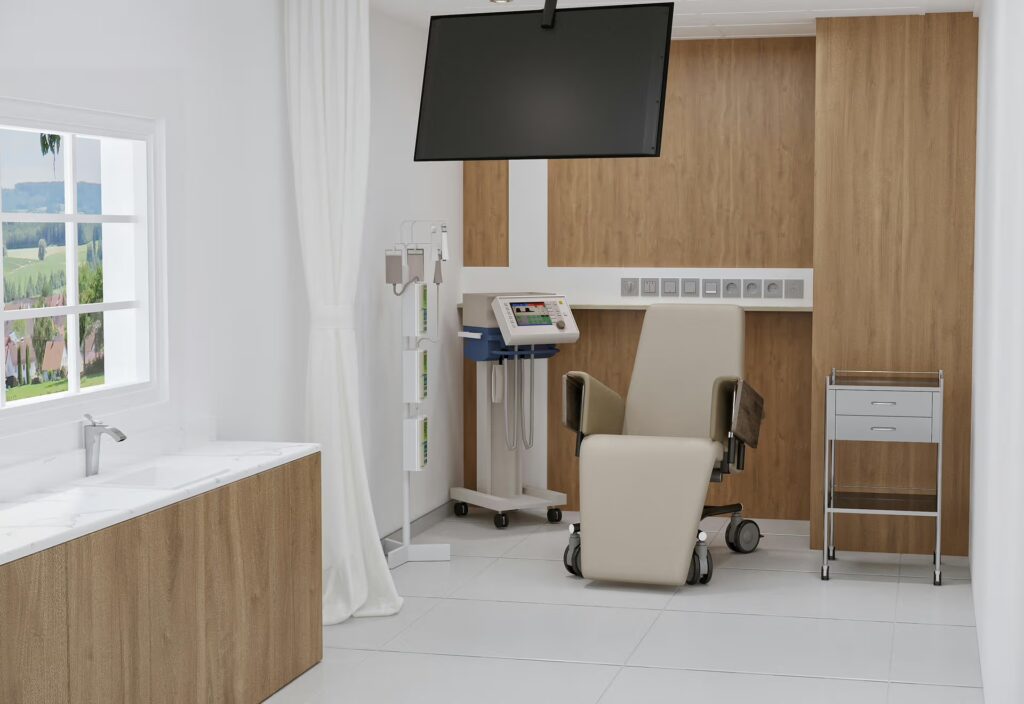
There are two main types of therapy chair. The first is designed for acute patient care such as oncology or dialysis where intensive treatments are needed such as dialysis, chemotherapy or other infusion-based therapy, to treat long-term health conditions. As these chairs are used for extended periods, comfort, pressure relief and adjustability are priorities.

The other type is used in outpatient clinics like phlebotomy and rehabilitation, where patients might undergo one-off blood tests or need to use a chair as a platform for physiotherapy. These chairs tend to focus on easy positioning changes and transfers for higher patient turnover.

Who Needs a Therapy Chair?
Therapy chairs are used across a wide range of clinical applications.
Dialysis and oncology wards use them to support patients through long infusion therapy sessions, providing exceptional levels of comfort and support through intensive treatments.
In outpatients clinics such as blood tests, mammography and rehabilitation, therapy chairs help move patients quickly and seamlessly, aiding transfers where needed, and optimise patient positioning for the tests and procedures.
Ultimately, any ward where patients need to be seated and repositioned for different treatments can benefit from a therapy chair.
Want to Trial a Therapy Chair for Your Ward?
Book a seating trial
What are the Benefits of a Therapy Chair?
Over other hospital chairs, the benefits of a therapy chair are:
- Flexibility – therapy chairs adjust to different positions for different activities, e.g. multiple armrest positions on the QuickCare Pro. They can be adjusted to different height surfaces for tables and work surfaces.
- Adjustable positioning – a range of positioning options from lie-flat to Trendelenburg, anterior tilt etc for maximum comfort and postural support, helping patients relax when undergoing therapy. Also adjustable armrests to accommodate IV lines/cannulas.
- Good for transfers – easier to transfer patients between different areas of the ward and from bed to chair, using smooth rolling braked castors, drop down arms, height adjustment and ergonomic push handles.
Other beneficial features of therapy chairs include:
- Easy to clean, supporting high infection control standards
- Pressure relief for extended periods sitting/lying
- CPR release so the chair can lay flat in an emergency
How to Choose the Right Therapy Chair
The right therapy chair depends on the setting its used in and the type of treatment being delivered. The chair needs to work for the staff on the ward as well as the patients, so its worth involving clinical and estates/procurement early on in the specification process.
QuickCare Pro Lie-Flat Chair
The QuickCare Pro is ideal for acute wards where patients spend long periods in one chair and need lie-flat capability, good pressure relief and multiple positioning options. The flexible armrests and adjustable height make it a good option for dialysis, chemotherapy and infusion therapy.

QuickCare Pro
VELA Phlebotomy Chair
For outpatient clinics where speed and simplicity are important like blood tests, the VELA Phlebotomy chair provides quick repositioning and ease of access for clinicians.

VELA Phlebotomy chair
VELA Activity Chair
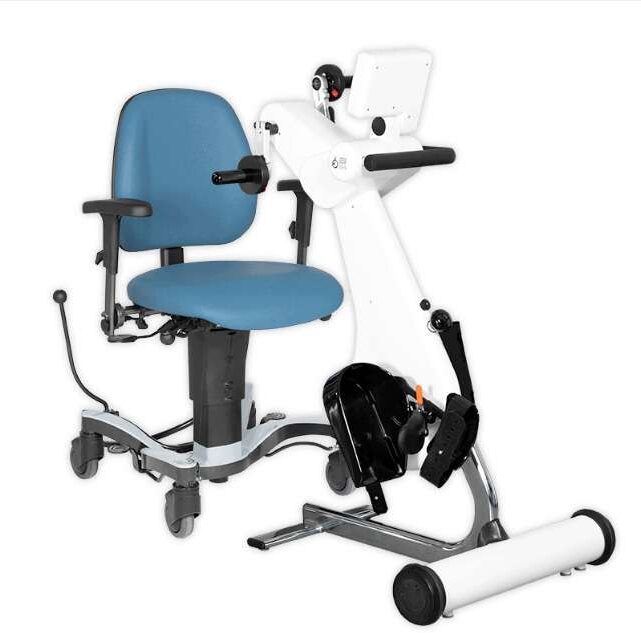
For outpatients regaining strength and mobility, the VELA Activity Chair provides a stable platform for physiotherapy and rehabilitation programs.
Whichever chair you choose, important factors to bear in mind are:
- The average amount of time patients will spend sitting in it
- The range of different positioning requirements
- How easy it is for staff to transfer in and out of the chair safely
Conclusion
A therapy chair plays a central role in the delivering of safe, comfortable secondary care treatments across a range of hospital settings.
The choice of therapy chair comes down to practical usability – how long patients sit out, what positions it needs to support, and how staff transfer in and out of the chair.
With the right chair in place, outpatient wards and clinics can improve patient comfort, infection control, making everyday clinical routines easier for staff.
Recommended Products
QuickCare Pro Lie-Flat Chair
The QuickCare Pro is an extremely versatile lie-flat chair, designed to adapt to wide array of different acute care settings, from day surgery through to dialysis and oncology.
Enquire About This Chair
VELA Phlebotomy Chair
The VELA Phlebotomy Chair is a manually adjustable sampling chair with robust multi-adjustable armrests, enabling quick and precise sampling in a high and diverse patient flow.
Enquire About This ChairVELA Activity & Exercise Chair
Designed for training and rehabilitation, the VELA Activity Chair provides a safe exercise chair with an anti-tip bar that provides extra stability even during powerful movements, for example, when doing exercises using the arm and leg trainer.
Enquire About This ChairFrequently Asked Questions